
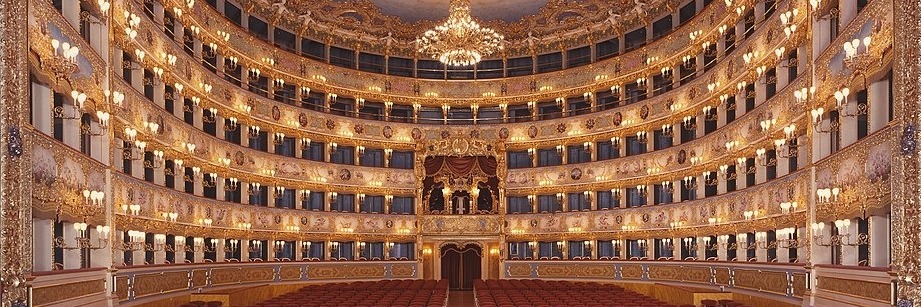
Few operas embody the delicate interplay between literature and music as profoundly as Claude Debussy’s Pelléas and Mélisande. Premiering in 1902, this work has often been described as the embodiment of symbolist art in musical form, a translation of the intangible into sound and gesture. Its origins lie not merely in music, but in the literary currents of the late 19th century, particularly the symbolist movement and the writings of Belgian playwright Maurice Maeterlinck. Understanding the opera requires a journey into the aesthetic philosophies that shaped it, the peculiarities of the play that inspired it, and the way Debussy transformed words into an ethereal musical language that continues to mesmerize audiences over a century later.
Maurice Maeterlinck and the Symbolist Play
The foundation of Debussy’s opera is Maeterlinck’s 1892 play Pelléas et Mélisande, a work that exemplifies symbolist drama. Symbolism, emerging in France and Belgium as a reaction against the naturalism and realism of the late 19th century, sought to evoke emotional and spiritual truths through suggestion rather than direct representation. Maeterlinck’s play is imbued with this ethos. The narrative is spare, the action often indirect, and the characters themselves seem like embodiments of moods and forces rather than fully detailed personalities.
Mélisande, the enigmatic heroine, is the very personification of mystery and fragility. Her actions are subtle, often unspoken, and her inner life remains largely inaccessible, reflecting the symbolist fascination with the unknown and the subconscious. Pelléas, by contrast, is a young man whose sensibilities and passions are muted by the oppressive atmosphere of courtly and familial duty. Golaud, the brooding older brother, embodies jealousy and latent violence, a shadow lurking over the gentle currents of desire and longing between Pelléas and Mélisande.
In Maeterlinck’s original play, the drama unfolds quietly, almost imperceptibly, with a focus on interior experience over outward action. Much of the tension arises not from dramatic events themselves but from the spaces between them: pauses, glances, and silences speak louder than words. This approach to narrative—where the unspoken and the unsaid dominate—challenged the conventional structures of theater at the time, and Debussy recognized its potential for musical expression.
Debussy’s Attraction to Symbolism
Debussy’s fascination with Maeterlinck’s work was rooted in his own aesthetic sensibilities. He was drawn to ambiguity, nuance, and the subtleties of emotional texture. Unlike the operatic tradition dominated by verismo or Wagnerian drama, which relied on heightened emotion and monumental gestures, Debussy sought a form of opera that could express fleeting impressions, subtle psychological states, and the ineffable quality of human emotion. Maeterlinck’s text offered precisely this: a stage where emotions are suggested rather than declared, where tension simmers beneath calm surfaces, and where the landscape and setting are as psychologically charged as the characters themselves.
The playwright’s insistence on silence and restraint resonated with Debussy’s musical philosophy. He famously rejected Wagner’s approach of endless melodic development and overt dramatic climaxes. Instead, he envisioned a musical language that mirrored the play’s delicacy, a soundscape of color and atmosphere where the orchestra could suggest feelings as much as the singers themselves. In this way, Debussy’s music functions as a psychological lens, magnifying the emotional undercurrents that Maeterlinck’s minimalistic text only hints at.
The Transformation from Play to Opera
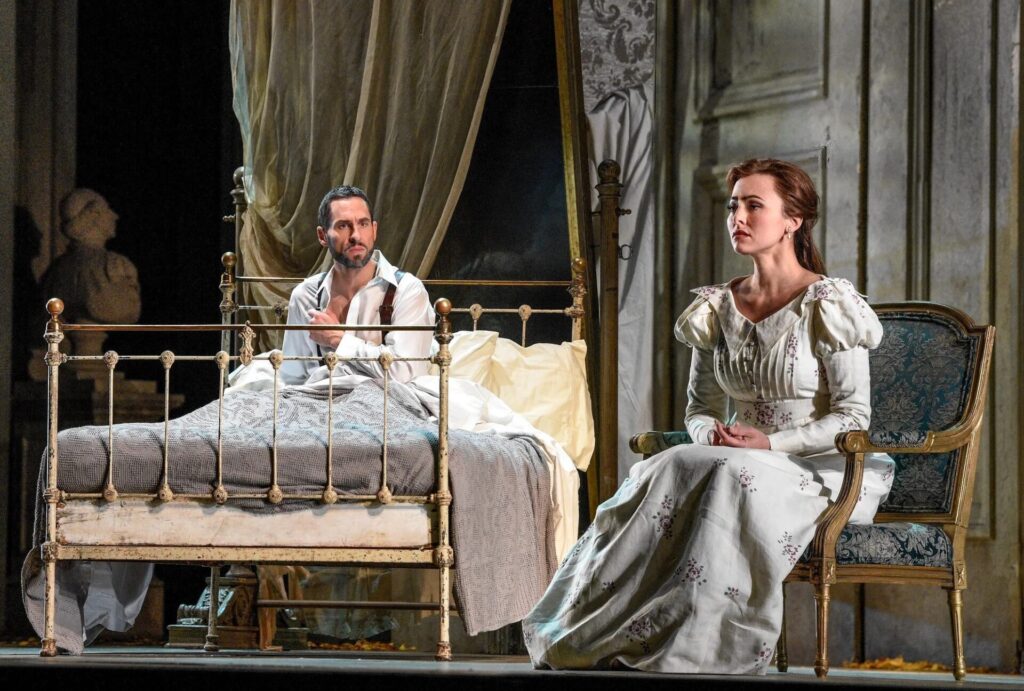
Turning Pelléas et Mélisande into an opera required more than setting text to music; it demanded a reconceptualization of dramatic pacing, characterization, and audience perception. Debussy was careful to preserve the play’s symbolic ambiguity while introducing musical elements that could illuminate the characters’ inner lives without undermining their enigmatic quality.
One of Debussy’s most innovative strategies was his use of vocal lines that mimic natural speech rhythms. Unlike traditional arias that showcase vocal virtuosity, the melodies in Pelléas and Mélisande often follow the subtle inflections of the French language, creating an intimate, conversational effect. This technique allows the music to remain faithful to the understated tension of Maeterlinck’s text while simultaneously imbuing it with emotional resonance. The result is a drama that feels both immediate and dreamlike, as if the audience is listening in on thoughts and feelings rather than conventional stage action.
The orchestration also plays a crucial role in translating symbolism into sound. Debussy uses instrumental color to evoke moods and environments: the shimmering strings suggest the play of water in a fountain or the rustle of leaves, while muted woodwinds and delicate harp passages conjure a sense of mystery and fragility. Nature is not merely a backdrop but an active participant in the drama, reflecting the symbolic weight of the characters’ emotions and the inevitability of fate.
Characters as Symbols
In both Maeterlinck’s play and Debussy’s opera, characters function less as individuals and more as embodiments of forces and ideas. Mélisande, with her soft voice and ephemeral presence, represents innocence, vulnerability, and the unknowable aspects of desire. Her connection with water imagery—her hair, her movements, and even the lighting in stage productions—reinforces her symbolic role as a liminal figure, caught between life and death, desire and repression.
Pelléas is the embodiment of sensitivity and emotional openness, yet he is trapped within the social structures and expectations of his world. Golaud, in contrast, symbolizes the darker impulses of human nature: jealousy, possessiveness, and the destructive power of unspoken fears. Even minor characters, such as Arkel, the wise old king, operate symbolically, representing authority, the weight of tradition, and the inexorability of fate. In Debussy’s musical treatment, each character’s leitmotif or instrumental association subtly underscores these symbolic qualities without ever resorting to overt melodrama.
Atmosphere and Setting as Psychological Landscape
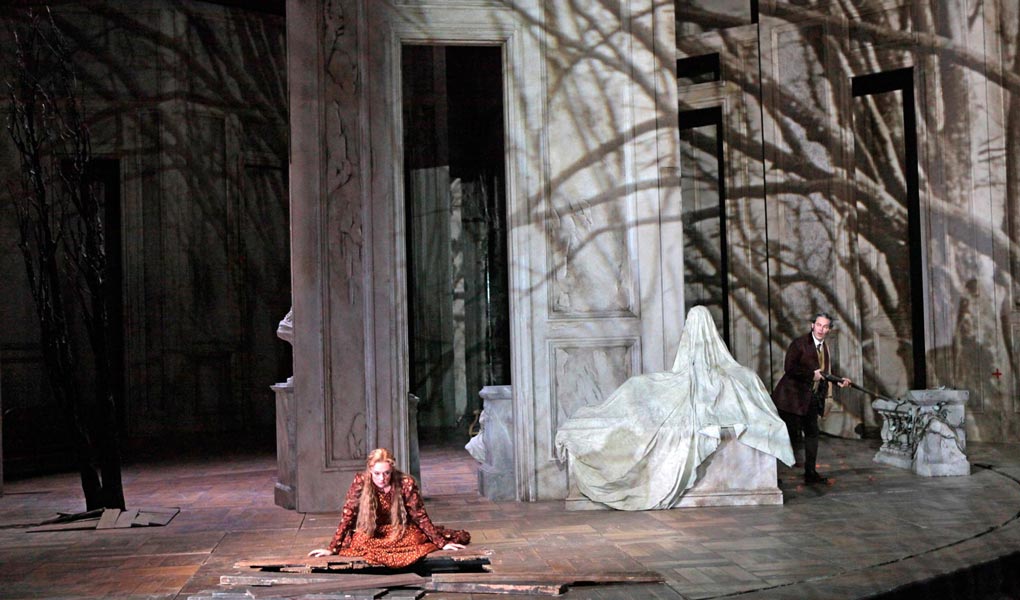
The symbolist stage thrives on suggestion and atmosphere, and Debussy’s opera translates this principle into music. Forests, towers, and fountains are not merely physical locations but reflections of the characters’ inner states. The forest, with its shadows and dappled light, mirrors the ambiguity of human desire and the lurking presence of danger. The castle’s dark corridors echo the constraints of social expectation and familial obligation. Even the play’s minimalistic stage directions are expanded musically to create an immersive psychological landscape, where the environment and the characters’ emotions are intertwined.
The opera’s pacing reinforces this immersive quality. Debussy avoids traditional climaxes in favor of gradual build-ups, subtle shifts in orchestration, and lingering silences. These musical choices mimic the symbolist theater’s reliance on tension in the spaces between words and actions, allowing the audience to inhabit the emotional and symbolic currents of the drama.
The Role of Fate and Inevitability
Central to the symbolic resonance of Pelléas and Mélisande is the theme of fate as an inexorable force. Maeterlinck’s play emphasizes the idea that human beings are often powerless before forces beyond their understanding. Debussy’s opera amplifies this sense of inevitability through harmonic ambiguity, unresolved cadences, and recurring motifs that suggest cycles of desire, jealousy, and tragedy. Even moments of tenderness between Pelléas and Mélisande are tinged with foreboding, a reminder that their happiness is fleeting and fragile.
Music becomes a conduit for this symbolic inevitability. The orchestra’s recurring textures create a sense of predestination, as if the narrative is guided by invisible currents that the characters themselves cannot perceive. Debussy’s subtle manipulation of tonal color and rhythm mirrors Maeterlinck’s use of silence and stillness, reinforcing the idea that destiny, rather than action or choice, governs the unfolding drama.
Reception and Legacy
When Pelléas and Mélisande premiered at the Opéra-Comique in Paris, it challenged the audience’s expectations of opera. Critics and listeners were confronted with a work that rejected traditional arias, overt emotional displays, and linear storytelling. Some were baffled by its subtlety and restraint, while others recognized it as a groundbreaking integration of literature and music. Over time, the opera has come to be celebrated as a masterpiece of symbolic expression, influencing countless composers and directors in both opera and theater.
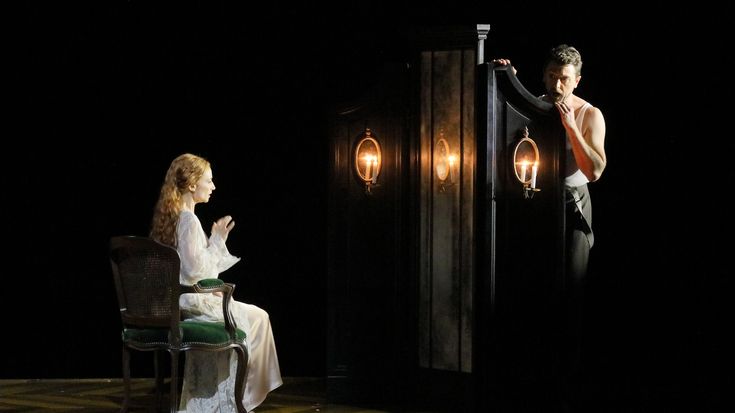
Its legacy lies in its ability to convey profound emotional and psychological truths without resorting to conventional dramatics. Debussy’s transformation of Maeterlinck’s play demonstrates that music can extend the symbolic power of literature, creating a stage where every gesture, pause, and note contributes to a web of meaning that transcends the literal. Modern productions continue to explore this potential, often emphasizing visual and atmospheric elements that highlight the symbolic interplay between character, environment, and fate.
Conclusion
Pelléas and Mélisande stands as a testament to the power of symbolism in both literature and music. By drawing upon Maeterlinck’s innovative play, Debussy crafted an opera that conveys emotional and psychological depth through subtlety, suggestion, and musical nuance. Its characters operate as symbols, its settings function as psychological landscapes, and its music captures the fleeting, ineffable qualities of human experience. For audiences, the opera offers a space to witness the interplay of desire, jealousy, and inevitability, all while being enveloped in a sonic world that is at once delicate and profoundly expressive. More than a century after its premiere, Pelléas and Mélisande remains a luminous example of how the literary and dramatic origins of a work can be transformed into an operatic masterpiece, where every element—from text to orchestration—serves the symbolic vision at its heart.