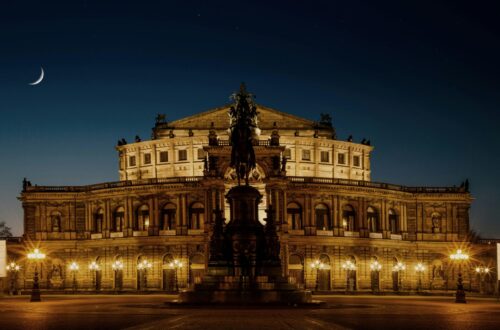

Few art forms encapsulate the full range of human emotion like opera. It is at once theatrical, musical, and deeply philosophical—a convergence of voice, orchestra, and drama that transcends the boundaries of language and culture. Opera is not merely entertainment; it is an emotional architecture, built from sound and story, where love, betrayal, joy, and death unfold in heightened form.
Since its birth in Renaissance Italy, opera has evolved through centuries, reflecting changing societies and aesthetics. From the divine tragedies of Monteverdi to the romantic splendor of Verdi, from Mozart’s wit to Wagner’s grandeur, opera remains a living, breathing testament to human expression.
To speak of the greatest operas of all time is not to list museum pieces, but to trace a journey through emotion and innovation, through works that have shaped our understanding of art and life itself.
Monteverdi and the Dawn of Opera

Every art form has its genesis, and for opera, that origin lies with Claudio Monteverdi. His 1607 masterpiece L’Orfeo marks the beginning of opera as we know it—a synthesis of music and drama capable of expressing both myth and emotion.
Monteverdi’s genius lay in his understanding of the human voice as a vehicle for psychology. L’Orfeo tells the story of Orpheus descending into the underworld to retrieve his beloved Eurydice—a narrative that would echo through centuries of opera. The music blends the structure of Renaissance madrigals with an emerging sense of melodic individuality, creating something revolutionary: a narrative sung into being.
Though written more than four hundred years ago, L’Orfeo still resonates because it captures the essential purpose of opera—to dramatize the human condition through sound. It is the point where music began to speak directly to emotion, setting the stage for everything that followed.
Mozart: The Perfection of Balance
If Monteverdi invented opera, Wolfgang Amadeus Mozart perfected its emotional and formal balance. His operas—particularly Le Nozze di Figaro, Don Giovanni, and Die Zauberflöte—represent the apex of classical symmetry and human insight.
In Le Nozze di Figaro (1786), Mozart transforms a biting social comedy into a study of love, power, and forgiveness. Every ensemble, every duet, weaves the voices of masters and servants into a tapestry of emotional complexity. Its finale remains one of the most dazzling achievements in all of Western music—a celebration of humanity’s chaos and grace.
Then there is Don Giovanni, his so-called “dramma giocoso,” a hybrid of comedy and tragedy. Here, Mozart gives us the seductive libertine whose defiance leads him to damnation. The music alternates between lightness and darkness, pleasure and punishment, with a psychological depth that feels startlingly modern.
Finally, The Magic Flute (Die Zauberflöte) offers a mythic and spiritual vision, where enlightenment triumphs over ignorance. Mozart fuses German folk elements, Masonic symbolism, and sublime melodies into a universal fable of human aspiration.
Mozart’s operas endure not simply because they are beautiful, but because they reveal the entire spectrum of being—from laughter to despair, all within perfect musical architecture.
Verdi: The Voice of the People

If Mozart gives us grace, Giuseppe Verdi gives us fire. Verdi’s operas embody the passions, politics, and moral struggles of the 19th century. He wrote not for aristocratic courts but for public theaters, and his music reflects the emotional immediacy of human experience.
Rigoletto (1851), Il Trovatore (1853), and La Traviata (1853) form a trinity of masterpieces that cemented Verdi’s reputation. Rigoletto, with its tortured jester and haunting aria “La donna è mobile”, confronts the cruelty of fate. La Traviata transforms the tragic story of a Parisian courtesan into a meditation on love, sacrifice, and societal hypocrisy. Few scenes in all of opera are as devastating as Violetta’s death—music so tender that it transcends tragedy.
Later works like Aida and Otello reveal Verdi’s increasing sophistication. Aida marries grand spectacle with psychological intimacy, while Otello, his Shakespearean adaptation, reaches operatic perfection through its relentless pacing and orchestral depth. Verdi mastered the art of making audiences weep, not through sentimentality, but through truthful emotional resonance.
His operas endure because they are profoundly human. Whether expressing vengeance, love, or despair, Verdi’s music speaks in the language of the soul.
Wagner: The Architect of the Infinite
Where Verdi looked outward to humanity, Richard Wagner looked inward—to myth, destiny, and metaphysics. His vision of opera as a “Gesamtkunstwerk”, or total work of art, reshaped Western music. Wagner integrated poetry, staging, and orchestration into one seamless whole, demanding that audiences not simply watch but experience the drama.
Tristan und Isolde (1865) stands as one of the most revolutionary works ever written. Its unresolved harmonies and chromatic tension foreshadowed modernism, while its depiction of love and death as intertwined forces redefined passion itself. The famous Tristan chord became a symbol of longing so intense it seemed to dissolve tonality itself.
Then came Der Ring des Nibelungen, a four-opera cycle spanning nearly fifteen hours. Drawing from Norse mythology, Wagner crafted an epic about gods, greed, and the corruption of power. With its monumental orchestration and recurring leitmotifs—musical ideas representing characters or themes—The Ring became the blueprint for cinematic storytelling, influencing everything from Mahler’s symphonies to Hollywood film scores.
Finally, Parsifal, his last opera, distills his philosophy into a meditation on compassion and redemption. It is both sacred ritual and human drama, blending mysticism with psychological depth.
Wagner’s operas are demanding, even exhausting, but they offer an experience of spiritual immersion unmatched in any other art form.
Puccini: The Poet of Emotion
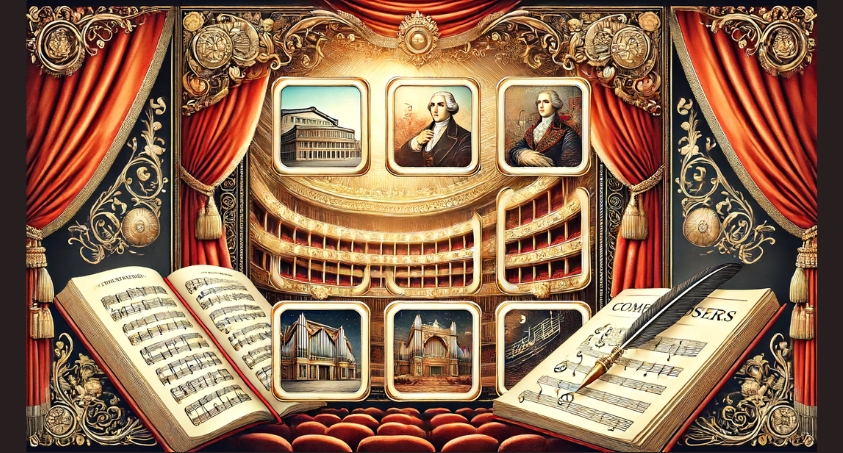
If Wagner sought transcendence, Giacomo Puccini sought intimacy. His operas speak not of gods or myths but of real human hearts, fragile and passionate. His gift was to express emotion with cinematic immediacy, his melodies soaring yet grounded in character and story.
La Bohème (1896) remains one of the most beloved operas of all time. Set in the bohemian quarter of Paris, it tells of young love and loss among struggling artists. The final scene, as Mimì dies in Rodolfo’s arms, achieves devastating power through simplicity—a single melodic phrase, repeated, dissolving into silence.
Tosca (1900) combines political intrigue and personal sacrifice in music that pulses with urgency. The aria “Vissi d’arte” is one of opera’s defining moments—a prayer that fuses faith, art, and despair. And Madama Butterfly (1904), with its haunting depiction of devotion and betrayal, remains an emotional wrecking ball, exploring cross-cultural tragedy with aching lyricism.
Puccini’s genius lay in his ability to make audiences feel without manipulation. His orchestration shimmers with cinematic texture, and his vocal writing flows as naturally as speech. He understood that opera, at its core, is about empathy through sound.
Strauss and the Modern Edge
As the 20th century dawned, Richard Strauss reimagined what opera could be. His Salome (1905) shocked audiences with its dissonant intensity and psychological realism, while Der Rosenkavalier (1911) blended nostalgic elegance with sensual humor.
Strauss used the orchestra like a psychological narrator, expressing emotions too complex for words. In Salome, the infamous “Dance of the Seven Veils” and her final monologue to the severed head of John the Baptist pushed boundaries of both music and morality. Der Rosenkavalier, by contrast, is bittersweet—a meditation on time, love, and the passing of youth.
Strauss’s operas bridge the romantic and the modern, blending lush harmonies with moments of startling dissonance. They remind us that opera’s evolution is also an evolution of emotion—from mythic universality to individual introspection.
The Twentieth Century: Reinvention and Renewal
The 20th century saw opera explode into diverse forms, as composers sought new ways to merge narrative and sound. Benjamin Britten’s Peter Grimes (1945) revived English opera with its portrayal of an outsider tormented by society. The sea itself becomes a character, its restless rhythms mirroring Grimes’s isolation.
Meanwhile, George Gershwin’s Porgy and Bess (1935) blended classical structure with jazz and blues, creating a distinctly American voice in opera. Songs like “Summertime” and “It Ain’t Necessarily So” transcend genre, fusing vernacular culture with emotional grandeur.
Later, Philip Glass’s Einstein on the Beach (1976) redefined opera altogether. Stripped of traditional narrative, it uses repetition and minimalist structure to induce a hypnotic state. The work is less about plot than about perception, proving that opera’s essence—music as emotional architecture—remains intact even in radical form.
These modern operas demonstrate that the genre is not static but endlessly adaptive, capable of reflecting every age’s fears, hopes, and identities.
Why These Operas Endure
The greatest operas endure because they touch something universal. They amplify the emotional intensity of human life—love, jealousy, power, and sacrifice—through music that transcends language. No other art form asks so much of both performer and audience: total immersion, vulnerability, and belief in the union of art and emotion.
Opera’s stories may be ancient or improbable, but the feelings are always immediate. When Violetta sings her farewell in La Traviata, or Isolde dissolves into love’s death, or Rodolfo cries “Mimì!” into the silence, the boundary between fiction and feeling disappears. The listener becomes participant, drawn into an experience that feels both infinite and intimate.
Conclusion: The Eternal Human Song
Opera endures because it speaks to what it means to be alive. Across centuries, languages, and styles, it remains the art form most attuned to the human pulse—our capacity for love, for loss, for transcendence through beauty.
From Monteverdi’s L’Orfeo to Glass’s Einstein on the Beach, opera has continually reinvented itself while remaining rooted in emotion. It is both history and heartbeat, both monument and whisper.
To experience a great opera is to stand at the intersection of sound and soul, where music becomes emotion incarnate. And in that moment, whether in the grandeur of Wagner or the tenderness of Puccini, we realize why opera remains one of humanity’s most profound creations: it is, simply, the voice of feeling itself.