
Opera has always been the grand meeting point of the arts — a fusion of music, theater, and visual splendor. But beneath the soaring arias and dramatic staging lies something even more fundamental: words. Before the first note is written, before the curtain rises, there is a story, often drawn from the rich tapestry of literature. Some of the world’s greatest operas owe their existence to poets and playwrights whose words were transformed into melodies that could move entire generations. The collaboration between literature and music has produced masterpieces that continue to define cultural heritage, blending the emotional power of poetry with the expressive force of song.
From ancient epics to modern novels, the influence of writers on opera has been profound. The composers may have set the stage with their orchestrations, but it was the poets who gave these operas their emotional pulse — the tragedies, passions, and dreams that could only be expressed when words learned to sing.
The Marriage of Poetry and Music
At its core, opera is storytelling through music. The librettist — the writer of an opera’s text — bridges the gap between literary inspiration and musical expression. Many of history’s greatest composers turned to existing poems, plays, and novels as sources, seeing in them a depth of emotion and dramatic structure perfectly suited for the stage. The language of poetry, with its rhythm, imagery, and emotional intensity, translates naturally into song, transforming narrative into living sound.
This collaboration has a long lineage. From the early Italian masters who adapted classical myths to the romantic composers who brought Shakespeare to life, literature provided opera with the narrative architecture that music could amplify. Each word chosen by a poet becomes, in the hands of a composer, a phrase of melody, and together they achieve something neither could create alone.
The Bard Behind the Curtain: Shakespeare’s Operatic Legacy
Few writers have inspired opera as profoundly as William Shakespeare. His plays, rich with emotional extremes, complex characters, and lyrical language, have proven irresistible to composers across centuries. Verdi, for instance, found in Shakespeare’s works the perfect foundation for his mature masterpieces. Otello (1887) captures the psychological intensity of jealousy and love, while Macbeth (1847) plunges into ambition’s dark corridors. Perhaps his crowning achievement, Falstaff (1893), transforms The Merry Wives of Windsor into a brilliant comic opera — a fitting farewell from a composer who turned a playwright’s wit into pure musical joy.
Other composers, too, fell under Shakespeare’s spell. Benjamin Britten’s A Midsummer Night’s Dream (1960) uses shimmering orchestration to capture the magical surrealism of the play, while Charles Gounod’s Roméo et Juliette (1867) renders one of literature’s most tragic love stories in lush Romantic harmonies. Each adaptation is a testament to how Shakespeare’s poetry lends itself naturally to music, where emotions transcend language and become universal.
Goethe and the Romantic Spirit
If Shakespeare embodied the English theatrical soul, Johann Wolfgang von Goethe served as the literary voice of German Romanticism. His poetic drama Faust became a touchstone for composers eager to explore the tension between ambition and redemption. Charles Gounod’s Faust (1859) remains one of the most enduring adaptations, its arias balancing beauty and despair with theatrical grandeur.
Goethe’s influence reached beyond a single story. His Werther, the tale of doomed love and emotional intensity, inspired Jules Massenet’s Werther (1892), one of the most poignant operas of the French repertoire. Through Massenet’s music, Goethe’s melancholy hero becomes a living embodiment of Romantic suffering — a man torn between passion and duty, whose despair finds expression not in words but in soaring melody. In these adaptations, Goethe’s poetry finds a second life, one that resonates not only in the intellect but in the heart.
From Epic to Aria: The Ancient Inspirations
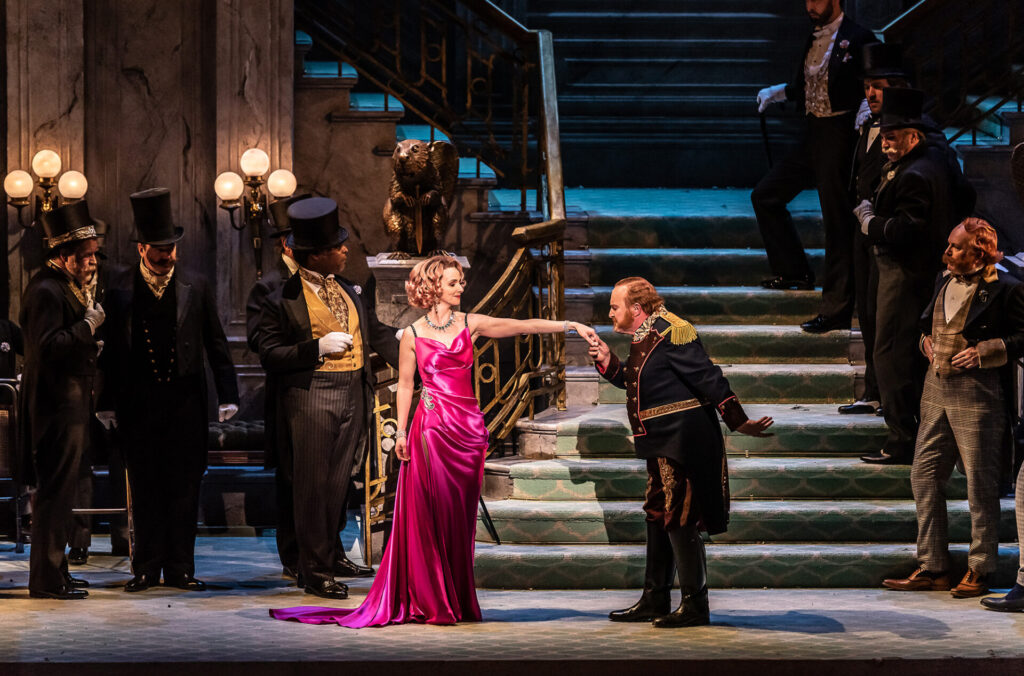
Long before the modern novel, the epics of antiquity provided the emotional and moral frameworks that would later echo through opera. Homer’s Odyssey and Iliad have inspired countless adaptations, with their timeless tales of heroism, loss, and human fragility. Composers such as Monteverdi and Gluck found in myth the ideal material for exploring grandeur and tragedy.
Monteverdi’s Il ritorno d’Ulisse in patria (1640) brought Homer’s Odyssey to life with music that mirrored the emotional journey of Odysseus returning home. Gluck’s Orfeo ed Euridice (1762), based on the Greek myth of Orpheus, remains a landmark in operatic reform — a work that balanced classical clarity with deep emotion. Through these retellings, ancient poetry was reborn, allowing mythic archetypes to find new resonance in human voices.
The Dark Allure of the Modern Poet
As the nineteenth century gave way to the modern era, poets and playwrights began exploring new psychological and social realities, and opera followed suit. Henrik Ibsen’s and Oscar Wilde’s dramas provided the introspective and often controversial material that symbolist and modernist composers sought. Richard Strauss’s Salome (1905), based on Wilde’s play, shocked audiences with its eroticism and violence but also captivated them with its lush, unsettling score.
In a similar vein, Alban Berg’s Wozzeck (1925), adapted from Georg Büchner’s unfinished play, delves into themes of madness, poverty, and alienation. Berg’s atonal music gives visceral power to Büchner’s fragmented tragedy, turning social critique into sound. These works mark a shift from mythic or romantic storytelling to psychological realism, demonstrating how literature continued to evolve opera into the twentieth century.
The French Masters: From Novel to Opera House
French literature, with its passion for emotional depth and moral complexity, has also provided a fertile source for opera. Victor Hugo’s and Alexandre Dumas’s works inspired some of the most popular operas of all time. Verdi’s Rigoletto (1851), based on Hugo’s Le roi s’amuse, portrays corruption and paternal love through unforgettable melodies. Dumas’s La Dame aux Camélias became the foundation for Verdi’s La Traviata (1853), a story of love and sacrifice that remains one of the most performed operas in history.
Gustave Flaubert’s Salammbô inspired operas by Ernest Reyer and others, though it never achieved the enduring popularity of Verdi’s adaptations. Still, these French literary influences highlight how the dramatic and poetic imagination of writers shaped the evolution of opera’s emotional language. Through their words, composers found the narratives that allowed music to explore the human condition in all its vulnerability and grandeur.
The Enduring Collaboration of Word and Music
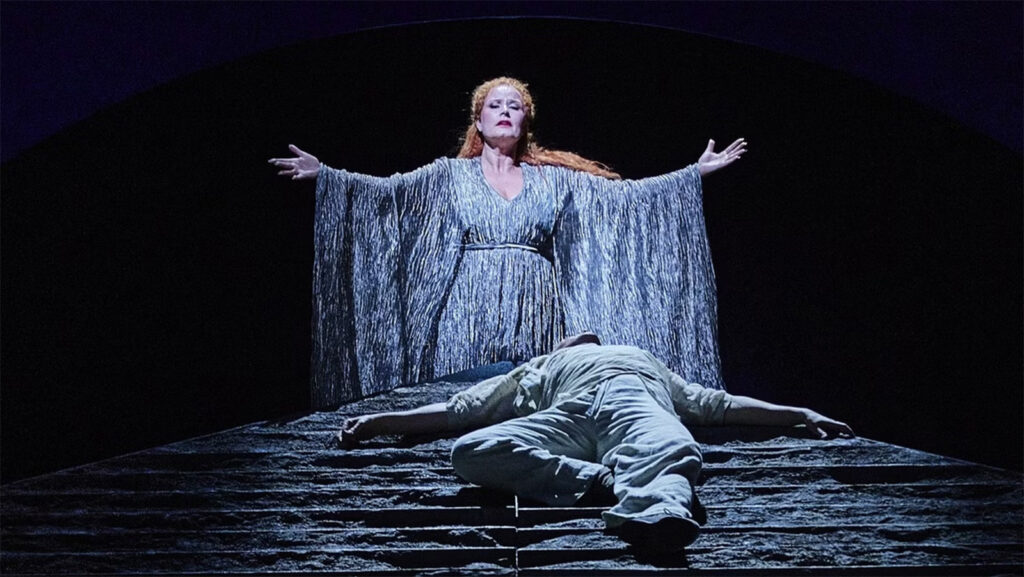
What makes poetry such a natural companion to opera is its rhythm and concision. Poetry distills emotion into its purest form, much like music does. The librettist’s art lies in maintaining this poetic essence while making it sing. Every syllable must align with melody and phrasing, every image must resonate with tone. In this sense, composers and writers engage in a delicate duet — one crafts words that move the heart, the other shapes them into sound.
Even in contemporary opera, literature continues to inspire. Modern composers adapt novels, films, and even historical texts, proving that the bond between the written word and the sung phrase is timeless. The stories may change, but the emotional truth — the desire to express what cannot be spoken — remains constant.
Conclusion
Opera, at its greatest, is the sound of poetry brought to life. From Shakespeare’s immortal lines to Goethe’s Romantic introspection and Wilde’s decadent modernity, writers have provided the words that composers transform into emotion made audible. These literary foundations remind us that before there was melody, there was meaning — and it is in the union of the two that opera finds its enduring magic.
When poetry sings, the world listens differently. It listens not only to stories but to feelings made vast and universal through music. Every aria, every chorus, carries within it the echo of a poet’s vision — the idea that words, when elevated by sound, can transcend the page and speak directly to the soul.