Michael Tippett’s King Priam, first performed in 1962, stands as one of the most intellectually ambitious and emotionally charged operas of the 20th century. Based on the ancient myths of the Trojan War, Tippett’s work is far more than a mere retelling of Homeric legend; it is a profound exploration of human nature, fate, and the inexorable march of history. What sets King Priam apart from many of its contemporaries is Tippett’s extraordinary ability to translate myth into sound, crafting musical symbolism that mirrors the emotional and psychological landscape of his characters while simultaneously creating an operatic language uniquely his own.
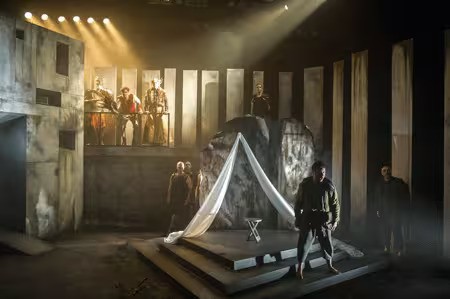
Tippett’s Mythical Canvas
At the heart of King Priam lies the story of Priam, the aging king of Troy, and his attempts to negotiate with fate amid the destruction of his city. Tippett, a composer deeply attuned to the human condition and historical context, was drawn to the psychological intensity of the myth. Unlike other adaptations of the Trojan narrative, Tippett does not romanticize the grandeur of war or glorify heroic deeds; instead, he focuses on the intimate, often tragic human dimensions of the story. This approach demands a musical language capable of conveying nuance, tension, and moral complexity—a language that Tippett masterfully constructs through his use of symbolism.
Tippett’s opera transforms myth into a sonic tapestry, where orchestral textures, harmonic shifts, and recurring motifs function as narrative signposts. The music does not merely accompany the drama; it actively shapes our understanding of the characters and their moral universe. Each sound, each interval, carries layers of meaning, inviting the audience to perceive the myth not as a distant story but as an immediate, emotionally immersive experience.
Leitmotifs and Character Identity
One of the most striking examples of Tippett’s musical symbolism is his use of leitmotifs. While Wagner famously employed leitmotifs to identify characters or concepts, Tippett’s approach is more psychologically nuanced. In King Priam, motifs often represent not just individuals but emotional states, ethical dilemmas, or the looming presence of fate. For instance, Priam’s own motif—a low, somber sequence of descending intervals—is less about marking his appearance on stage and more about evoking his weariness, moral responsibility, and the inexorable weight of kingship.
Hector, in contrast, is associated with brighter, more lyrical motifs, yet Tippett subtly inflects these with dissonance, foreshadowing his impending doom. The interplay of motifs becomes a musical dialogue that mirrors the narrative tension. When Hector’s theme intersects with Priam’s, the result is not harmony but a complex web of conflicting emotions—a musical representation of familial love entangled with the inevitability of tragedy. This sophisticated use of leitmotif exemplifies Tippett’s ability to encode psychological depth directly into the score.
Harmonic Language and Emotional Resonance
Tippett’s harmonic choices in King Priam further enhance the opera’s symbolic power. He often juxtaposes tonal and atonal passages, creating a tension that mirrors the instability of the Trojan world. In moments of intimate reflection or human vulnerability, the music leans toward tonal clarity, offering a brief respite from the dissonant chaos surrounding the city. Conversely, scenes of conflict, despair, or confrontation with fate are marked by jagged, dissonant harmonies that refuse resolution.
This manipulation of tonality is not merely a technical exercise; it is a symbolic reflection of the opera’s themes. The clash between consonance and dissonance mirrors the tension between human aspiration and historical inevitability. In a sense, Tippett’s harmonic landscape is a moral one: beauty exists, but it is fragile, constantly threatened by forces beyond the characters’ control. Listeners unconsciously absorb these tonal signals, experiencing the myth’s emotional undercurrents even when the words themselves are spare or ambiguous.
Orchestration as Symbolic Palette
The orchestration of King Priam is another arena in which Tippett’s symbolic genius becomes evident. He treats the orchestra not simply as accompaniment but as a narrative agent, capable of evoking psychological and dramatic meaning. For example, the use of muted brass and low strings often underscores moments of grief, tension, or foreboding, creating a sonic shadow that mirrors the dark trajectory of Troy itself. Conversely, woodwinds and higher strings are used sparingly to suggest fleeting moments of hope, beauty, or innocence, such as the tender exchanges between Priam and his family.
Percussion, too, plays a symbolic role. Sudden, stark percussion accents punctuate scenes of violence or moral reckoning, acting as auditory jolts that remind the audience of fate’s inexorability. Tippett’s orchestration often blurs the line between harmony and texture, using clusters, glissandi, and unconventional instrumental combinations to evoke the chaotic, unpredictable nature of war. This approach transforms the orchestra into a living, breathing embodiment of the mythic world, capable of expressing what words alone cannot.
The Role of Chorus and Collective Symbolism
In King Priam, the chorus is far more than a conventional Greek chorus; it serves as a symbolic and emotional mirror for the audience. Tippett’s choral writing frequently employs complex polyphony and overlapping textures, reflecting the multiplicity of voices, fears, and desires that constitute the Trojan society. At times, the chorus functions as a moral compass, silently commenting on the actions of the principal characters. At other moments, it becomes a sonic representation of fate itself—inescapable, overwhelming, and indifferent to human suffering.
The interplay between soloists and chorus creates a layered musical symbolism. Priam’s private laments and negotiations with Hector are often set against the chorus’s distant, echoing presence, emphasizing the tension between individual agency and collective destiny. Tippett’s careful manipulation of spatial and textural relationships within the music allows the audience to perceive the tragic inevitability of the narrative as a living, almost tactile experience.
Temporal and Rhythmic Symbolism
Tippett’s use of rhythm and temporal structure also contributes significantly to the opera’s symbolic depth. He frequently juxtaposes irregular, fragmented rhythms with more lyrical, flowing passages, reflecting the instability of human life against the backdrop of inexorable historical forces. The sense of temporal elasticity in the score mirrors the mythic narrative’s dual focus: the immediacy of personal emotion and the timeless sweep of history.
Moments of sudden rhythmic suspension—pauses, elongated notes, or unexpected silences—heighten dramatic tension and underscore critical moral or emotional decisions. Tippett’s rhythmic symbolism is subtle but powerful: it communicates the fragility of human control, the unpredictability of fate, and the weight of ethical responsibility in a world governed by forces far larger than any individual.
Integration of Text and Music
Another remarkable aspect of Tippett’s musical symbolism in King Priam is his integration of the libretto with the score. Tippett was deeply involved in shaping the text, ensuring that language and music were inseparable in their expressive power. The vocal lines often mirror the psychological state of the characters, with contour, intervallic leaps, and rhythmic flexibility reflecting mood, tension, or moral ambiguity.
Priam’s lines, for example, are frequently set in a measured, reflective rhythm, underscoring his contemplative nature and the burden of his kingship. Hector’s passages, by contrast, are more expansive and lyrical, conveying vitality and emotional warmth even in the face of tragedy. The alignment of text and musical symbolism amplifies the audience’s perception of character and theme, making King Priam not just a story about mythic events but an immersive exploration of human consciousness and ethical choice.
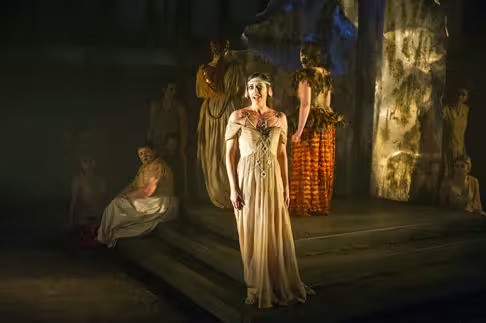
Tippett’s Philosophical and Emotional Ambitions
Underlying all of Tippett’s musical symbolism is a profound philosophical ambition. King Priam is not simply an opera about the fall of Troy; it is a meditation on human morality, the inevitability of death, and the interplay between personal desire and historical forces. Tippett’s musical choices—harmonic tension, orchestral color, rhythmic irregularity, and thematic development—are all in service of exploring these fundamental questions.
The emotional impact of the opera derives directly from this symbolic richness. Audiences experience grief, awe, and moral contemplation not because they are being told what to feel but because the music itself embodies the narrative’s ethical and emotional dimensions. Tippett’s score transforms abstract myth into a deeply human experience, making King Priam both timeless and immediately relevant.
Legacy and Influence
King Priam remains a unique achievement in 20th-century opera precisely because of its sophisticated use of musical symbolism. Tippett demonstrated that opera could be more than spectacle or melodrama; it could be an intricate, emotionally resonant exploration of human experience. Subsequent composers have cited Tippett’s ability to intertwine myth, psychology, and musical narrative as influential, particularly in how to convey ethical and emotional complexity through symbolic orchestration and thematic development.
The opera’s continued relevance lies in its emotional authenticity and its capacity to engage audiences intellectually and viscerally. Even in modern productions, directors and performers grapple with Tippett’s rich symbolic score, finding new ways to interpret its layers of meaning and to communicate the profound human truths at its core.
Conclusion
Michael Tippett’s King Priam exemplifies the transformative power of musical symbolism in opera. By encoding emotional states, moral dilemmas, and the inexorable presence of fate directly into the music, Tippett turns the ancient myth of Troy into an immersive, psychologically compelling experience. From the interplay of leitmotifs and harmonic tension to orchestral texture, choral symbolism, and rhythmic nuance, every element of the score serves to translate myth into sound. Tippett’s achievement is not merely technical but profoundly human: he creates a world where the audience does not merely observe tragedy but feels its weight, its beauty, and its inexorability.