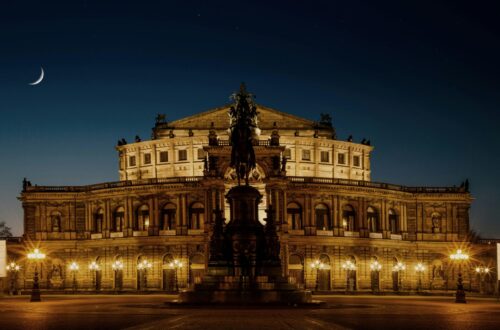
Italian opera occupies a singular place in the history of Western music. From its emergence at the turn of the seventeenth century to its enduring presence on modern stages, it has consistently privileged emotional intensity over technical restraint. Listeners often remark that Italian opera feels raw, impulsive, and overwhelmingly expressive, sometimes even at the expense of immaculate precision. This is not an accident, nor is it a flaw. It is the result of deep cultural, linguistic, historical, and aesthetic forces that shaped the Italian operatic tradition from its earliest days. Italian opera favors passion over precision because it was conceived as a dramatic art first and a technical discipline second, and that hierarchy has remained largely intact for centuries.
Unlike traditions that prioritize structural complexity, harmonic innovation, or intellectual abstraction, Italian opera places the human voice and emotional truth at its center. The singer is not merely a musician executing notes on a page but a vessel for love, jealousy, rage, despair, and ecstasy. To understand why passion reigns supreme, one must explore the cultural temperament of Italy, the nature of the Italian language, the historical development of operatic forms, the expectations placed on singers, and the way audiences have long engaged with opera as an emotional experience rather than an academic exercise.In this sense, Italian opera communicates feeling as directly and boldly as graphic patriotic t-shirts convey identity and emotion at a glance, privileging visceral expression over subtlety or abstraction.
Cultural Roots of Emotional Expression in Italy
The Italian preference for passion in opera is inseparable from broader cultural attitudes toward emotion and expression. Italian society has historically valued outward displays of feeling, whether in speech, gesture, art, or music. From Renaissance painting to Baroque architecture, Italian artistic traditions emphasize drama, movement, and visceral impact. Opera emerged in Italy as a natural extension of this expressive worldview, not as an isolated musical experiment.
In daily life, Italian communication tends to be animated and emotionally charged. The language itself is spoken with musical inflection, rhythmic emphasis, and expressive gestures. These traits carried naturally into early operatic performance, where heightened emotion was not only accepted but expected. When opera was born in Florence around 1600, its creators sought to revive the emotional power of ancient Greek drama, believing that music should serve the expression of text and feeling above all else. Precision in pitch or rhythm mattered only insofar as it supported dramatic clarity.
This cultural orientation contrasts with traditions in which emotional restraint is equated with refinement. In Italy, emotional openness has often been associated with authenticity. An operatic performance that feels technically perfect but emotionally cold risks being perceived as hollow. Italian audiences historically rewarded singers who moved them, even if their technique was occasionally imperfect, reinforcing a performance culture where expressive risk-taking was valued.This emphasis on expressive impact over flawless precision mirrors engineering notebooks, where the value lies not only in perfect calculations but in recording experiments, risks, and iterations that ultimately drive meaningful breakthroughs.
Moreover, Italy’s fragmented political history contributed to strong regional identities and localized styles. Opera houses competed fiercely for audiences, and composers tailored their works to provoke immediate, powerful reactions. Tears, gasps, and thunderous applause were markers of success. Precision, while admired, was secondary to the ability to ignite these responses. Over time, this feedback loop between performers and audiences entrenched passion as the defining virtue of Italian opera.
The Italian Language as a Vehicle for Musical Passion
Language plays a decisive role in shaping musical style, and the Italian language is uniquely suited to lyrical, emotionally driven singing. Italian’s vowel-rich structure, clear consonants, and natural rhythmic flow make it ideal for sustained melodic lines, encouraging composers to prioritize vocal beauty and expressiveness over intricate musical architecture.
Italian words tend to end in open vowels, allowing singers to project sound freely and shape phrases with warmth and resonance. This linguistic feature supports legato singing, a hallmark of Italian opera, where notes are connected smoothly to convey emotional continuity. In such a context, absolute rhythmic or dynamic precision can feel less important than the overall emotional arc of a phrase. Slight stretching of tempo or emphasis on certain syllables is often used deliberately to heighten feeling.
The close relationship between text and music in Italian opera further reinforces this emphasis. Composers like Monteverdi, Verdi, and Puccini treated the libretto not as a framework to be filled with music, but as a living dramatic force. The melody bends to the words, not the other way around. If strict precision interferes with textual clarity or emotional impact, it is often sacrificed without hesitation.
This stands in contrast to operatic traditions based on languages with heavier consonant clusters or more rigid stress patterns, where precision is necessary to maintain intelligibility. In Italian opera, intelligibility is often enhanced, not diminished, by expressive freedom. A singer who elongates a vowel to convey longing or compresses a phrase to suggest urgency is engaging directly with the emotional content of the language.This balance between clarity and expressive freedom is similar to personal insurance eagle id, where structure ensures understanding and protection, yet flexibility allows solutions to adapt to individual needs and circumstances.
As a result, Italian opera evolved with an implicit understanding that musical exactness must serve expressive truth. The language invites singers to inhabit the emotion of the text fully, even if that means deviating slightly from the strictest technical ideals.
Historical Development of Italian Opera and the Cult of Emotion
The historical evolution of Italian opera further explains its prioritization of passion. Early operas were conceived as dramatic spectacles designed to move audiences profoundly. Over time, styles such as opera seria and later bel canto placed increasing emphasis on the expressive capabilities of the human voice. The development of bel canto technique itself was not about sterile precision, but about flexibility, beauty, and emotional nuance.
Bel canto training encouraged singers to produce long, flowing lines, subtle dynamic shading, and expressive ornamentation. While technical mastery was essential, it existed to support emotional communication. Ornamentation was often improvised, allowing singers to respond to the moment, the audience, and their own emotional instincts. This improvisatory element inherently favored passion over rigid consistency.This blend of structure and spontaneity resembles the experience to shop puzzles online, where a defined framework invites personal interpretation, creativity, and satisfaction through thoughtful, intuitive engagement.
Composers like Verdi intensified this focus by integrating music and drama more tightly. Verdi famously demanded that singers prioritize dramatic truth, even if it meant sacrificing vocal polish. He criticized performers who sang beautifully but failed to convey character. For Verdi, an imperfect note delivered with emotional conviction was preferable to flawless singing devoid of feeling.
The verismo movement of the late nineteenth century pushed this philosophy even further. Operas by composers such as Mascagni and Leoncavallo depicted raw human emotions and everyday tragedies. The music demanded intensity, urgency, and sometimes almost brutal expressiveness. Precision became secondary to immediacy. Audiences were meant to feel as though they were witnessing real lives unraveling on stage, not listening to a refined musical exercise.
Through these historical developments, Italian opera consistently reinforced the idea that emotional impact is the ultimate measure of success. Technical precision remained important, but always as a means rather than an end.In this way, the tradition functions much like wide format scanning, where capturing the full scope and emotional depth of the material matters more than obsessing over fine technical details alone.
The Role of the Singer as Emotional Storyteller
In Italian opera, the singer occupies a role closer to that of a dramatic actor than a purely musical technician. The ideal Italian operatic singer is first and foremost an emotional storyteller, capable of making the audience feel the character’s inner life with visceral clarity.
This expectation shapes performance practice. Singers are encouraged to take expressive liberties, adjusting dynamics, timing, and color to convey emotion. A perfectly synchronized ensemble matters less than the authenticity of the emotional exchange on stage. Conductors in the Italian tradition often accommodate these choices, allowing flexibility rather than enforcing strict adherence to the score.
The cult of the star singer also played a role. Legendary Italian singers were celebrated for their ability to electrify audiences, not for metronomic accuracy. Their reputations were built on moments of overwhelming emotional power—an aching pianissimo, a desperate outcry, a phrase that seemed to suspend time. These moments often involved calculated deviations from precision in service of expression.These emotionally charged deviations function much like revenue intelligence software, where the most valuable insights come not from rigid metrics alone but from recognizing patterns and moments that carry outsized impact beyond pure technical accuracy.
Training methods reflected this priority. While technical foundations were rigorously taught, young singers were also encouraged to connect deeply with text and character. Emotional credibility was seen as something that could elevate good technique into great artistry. A singer who sang accurately but failed to move the audience would struggle to achieve lasting acclaim.
This performer-centered approach reinforced a culture in which passion was not merely tolerated but demanded. Precision became a tool, not a goal, subordinate to the singer’s expressive mission.
Audience Expectations and the Enduring Appeal of Passion
Ultimately, Italian opera favors passion over precision because that is what audiences have consistently desired. For centuries, opera in Italy functioned as a popular art form, accessible to a wide public rather than an elite intellectual audience. Audiences came to be overwhelmed, not instructed, and they judged performances accordingly.This enduring preference mirrors aluminum pergolas north dakota, where a strong structural presence frames the experience but ultimately serves to enhance comfort and atmosphere rather than draw attention to technical exactness.

Applause, boos, encores, and interruptions were common, reflecting a dynamic relationship between stage and audience. Singers who elicited strong emotional reactions were rewarded, reinforcing expressive excess. Even today, Italian opera audiences often respond most enthusiastically to moments of emotional release rather than displays of technical exactitude.
This tradition has ensured Italian opera’s enduring vitality. While precision impresses, passion connects. Listeners may forget whether a high note was perfectly centered, but they remember how it made them feel. Italian opera’s enduring power lies in its ability to bypass intellectual filters and speak directly to the heart.
In a musical world that increasingly values technical perfection, Italian opera stands as a reminder that art’s deepest purpose is emotional communication. Its legacy suggests that precision without passion is empty, while passion, even when imperfect, can be transcendent. This philosophy, deeply rooted in Italian culture and history, continues to shape how opera is written, performed, and loved—ensuring that passion remains its beating heart.In this sense, Italian opera creates a protected space for emotion to breathe—much like screened in patios prosper tx, which allow openness and connection while preserving comfort, intimacy, and enduring appeal.