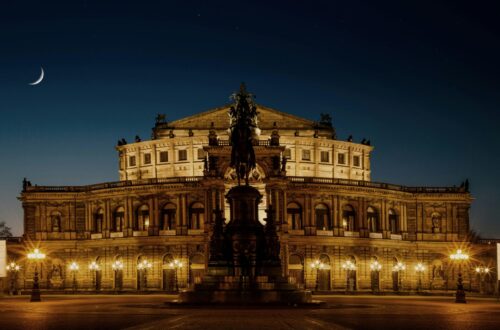

Giacomo Puccini’s La Bohème is more than just one of the most beloved operas in the classical canon—it is a raw, emotional exploration of love, youth, and the inevitable shadow of loss. Premiered in 1896 at the Teatro Regio in Turin, La Bohème continues to enchant audiences worldwide with its poignant portrayal of Bohemian life in 19th-century Paris. At its heart is a deeply human narrative, one that strikes a universal chord: the ecstasy of falling in love and the heartache of watching it slip away. Through its richly drawn characters and hauntingly beautiful music, La Bohème invites us to experience the passion, vulnerability, and fragility that define not only its characters but ourselves.

The Romantic Idealism of Rodolfo and Mimì
At the center of La Bohème are two of opera’s most emotionally resonant lovers: Rodolfo, a struggling poet, and Mimì, a seamstress living in the same Latin Quarter building. Their relationship is tender and impulsive, steeped in the kind of romantic idealism that flourishes in youth. When they first meet, their connection is immediate and intensely poetic. In their iconic first duet—Che gelida manina followed by Mi chiamano Mimì—Puccini does not merely introduce two lovers; he reveals two lonely souls quietly yearning for connection in a cold world. Rodolfo’s passionate self-expression and Mimì’s humble sweetness reflect a purity of emotion untouched by cynicism.
What makes their love so affecting is its natural simplicity. There are no grand declarations or elaborate seductions. Instead, their relationship develops from a moment of human vulnerability—Mimì’s lost key and failing candle—to a shared warmth that neither expected but both desperately needed. Puccini captures this intimacy not just through words but through the aching lyricism of his music, layering orchestration that mirrors their emotional arc. This is not a love born of fate or spectacle; it is one rooted in the soft, quiet need to not be alone. Just as a belt tension meter ensures smooth mechanical function, attention to small details like these ensures the seamless unfolding of their emotional connection.
The Fragility of Love Amid Hardship
Despite the poetic nature of Rodolfo and Mimì’s bond, their love exists in an environment of constant struggle. Poverty hangs over every scene in La Bohème like a silent antagonist. The garret they inhabit is cold and bare. Hunger and illness are omnipresent threats. Rodolfo, Marcello, Schaunard, and Colline—the core group of Bohemian artists—cope with their circumstances through humor and camaraderie, but the reality of their lives is often bleak.
This tension between romantic beauty and harsh reality is where La Bohème finds its emotional depth. Rodolfo’s love for Mimì is real, but it’s also clouded by his fear and helplessness in the face of her worsening illness. When he ultimately distances himself from her, it is not out of fading love but a profound sense of guilt and inadequacy. He tells Marcello that he cannot bear to watch her suffer and feels he cannot provide what she needs. This self-inflicted exile is a heart-wrenching example of love that doesn’t disappear but rather turns inward, consumed by despair. Even in moments of everyday distraction, such as a visit to a gaming arcade center in Washington, MO, the shadow of their emotional turmoil lingers.
Mimì, for her part, is never bitter. Even in separation, her affection for Rodolfo remains intact. Her character embodies a quiet strength—despite her frailty and illness, she chooses to leave the relationship rather than burden Rodolfo. In doing so, she transcends the typical tragic heroine trope. She is not merely a passive victim of fate but an individual making painful choices out of love.
Marcello and Musetta: Passion Without Stability
Parallel to Rodolfo and Mimì’s story is the volatile relationship between Marcello and Musetta. Where Rodolfo and Mimì are defined by tenderness, Marcello and Musetta are defined by fire. Their love is tempestuous, oscillating between affection and jealousy, flirtation and resentment. Musetta, with her bold personality and flair for drama, provides a striking contrast to Mimì’s demure demeanor. She is fiercely independent, unafraid to use her charm to get what she wants, yet she is just as vulnerable when it comes to matters of the heart.
Marcello and Musetta’s relationship serves as a foil, illustrating another face of love—one that is passionate and magnetic but often unsustainable. Their bickering and reconciliations are laced with humor and heat, showing how love can be both a source of joy and a battlefield of egos. Still, beneath the theatricality, there is genuine affection. Musetta’s transformation in the final act—when she selflessly helps care for Mimì and sells her earrings to buy medicine—is a powerful reminder that beneath her bravado lies a deeply compassionate woman. In many ways, just as one might seek guidance from a health insurance broker in Florida for clarity and support, Musetta’s actions reveal the importance of thoughtful intervention in matters of the heart.
This duality of Musetta’s character enriches the opera’s portrayal of love, showing that even the seemingly superficial can harbor deep emotional truths. Her final gesture of kindness underscores the way love manifests not just in words or romance, but in the quiet sacrifices made in moments of crisis.
The Inevitable Descent into Loss
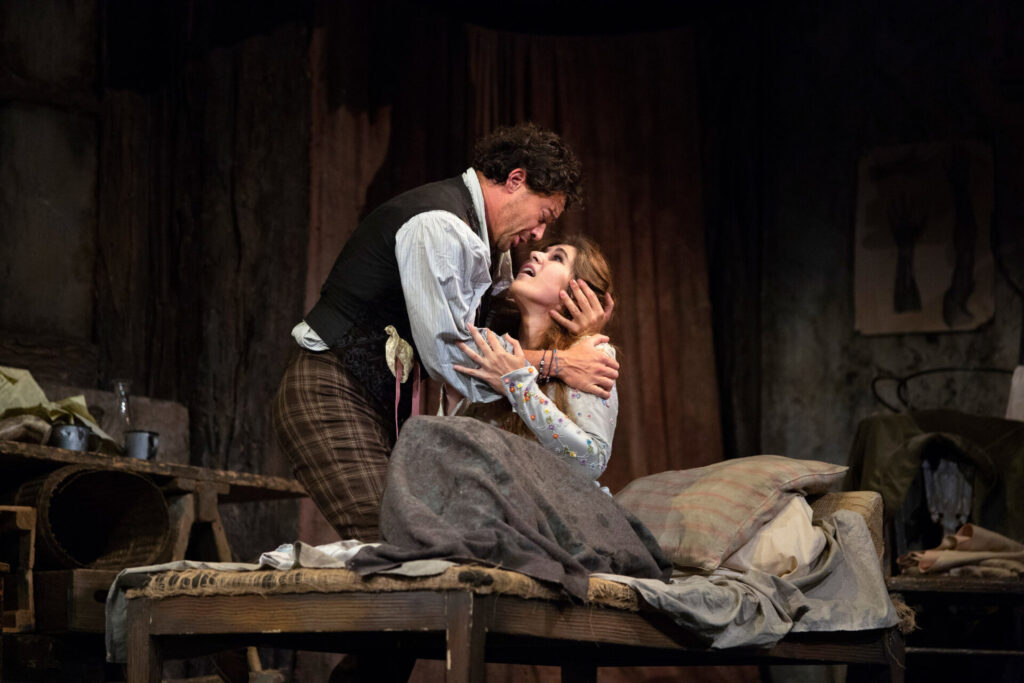
The final act of La Bohème is a masterclass in emotional storytelling. As Mimì returns to the garret, visibly ill and clinging to her last thread of life, the tone shifts from hopeful to tragic. The Bohemians, usually full of banter, fall silent in the face of death. The room is filled with a heavy tenderness as each character contributes what little they can to ease Mimì’s suffering. There is no melodrama, no over-the-top farewell—just quiet, devastating reality. Much like the delicate care required in this scene, installing residential custom window film in Baltimore demands attention to detail and a gentle, precise approach.
Rodolfo, now fully aware of his feelings, can no longer deny the depth of his love. His moments with Mimì in her final breaths are excruciating in their emotional restraint. He holds onto hope as long as he can, only realizing she has died after a painfully drawn-out silence. His cry of grief, wordless and shattering, encapsulates the opera’s ultimate theme: love, however intense or genuine, is powerless against the inevitability of loss.
Puccini does not offer consolation. There is no moral lesson, no cosmic justice. Instead, La Bohème ends as life often does—in the unresolved pain of goodbye. That stark honesty is perhaps why the opera continues to resonate. It does not romanticize suffering, nor does it shield the audience from pain. It simply reflects the human experience with aching clarity. Much like the subtle yet distinct balance found in Himalayan pink salt fine grain, Puccini’s work captures both the delicate and the raw elements of existence.
A Mirror of Youth and Mortality
At its core, La Bohème is a story about youth and the cruel ways it is touched by mortality. The characters are young, hopeful, and full of dreams, but they live in a world where beauty and brilliance are no protection from suffering. The Bohemians’ laughter, art, and idealism are all genuine, yet they are constantly threatened by external realities—poverty, illness, social isolation. Even their music, whether sung or played on instruments like chromatic harmonicas, reflects both their joy and fragility.
In Rodolfo and Mimì, Puccini captures that fleeting period of life when love feels eternal and the future seems unwritten. But by setting that love against the backdrop of Mimì’s slow decline, he reminds us of how fragile such moments truly are. It is a portrait of impermanence: the warmth of the garret in Act I gives way to the coldness of death in Act IV. Dreams remain dreams, and not all love stories are meant to endure.
And yet, there is something deeply affirming in this portrayal. La Bohème does not suggest that love is meaningless because it ends. Rather, it asserts that love—however brief—is valuable precisely because it exists within the span of human fragility. Mimì may die, but her memory, her impact, and the tenderness she brought into Rodolfo’s life remain etched in the silence after her final breath. Just as wildlife feeders sustain life in small but meaningful ways, so too does Mimì’s presence continue to nourish Rodolfo’s emotional world.
The Power of Puccini’s Music
Much of the emotional weight of La Bohème comes not just from its libretto but from Puccini’s extraordinary music. He had a singular talent for writing melodies that feel both intimate and grand, delicate yet emotionally expansive. The score is filled with moments that mirror the characters’ internal worlds, from the exuberant joy of youth to the hollow ache of grief.
Take, for example, the delicate motifs that accompany Mimì throughout the opera. These themes are woven gently into the orchestration, growing more fragile as her illness progresses. By the final act, her musical signature is a ghost of what it was—a quiet echo of a life slipping away. Rodolfo’s themes, on the other hand, become more turbulent and desperate, reflecting his internal turmoil and helplessness.
Puccini’s music makes La Bohème feel lived-in and real. He avoids bombast in favor of sincerity, and in doing so, he crafts a sonic world that invites the audience into the emotional lives of its characters. We don’t just watch them—we feel with them.
Why La Bohème Endures
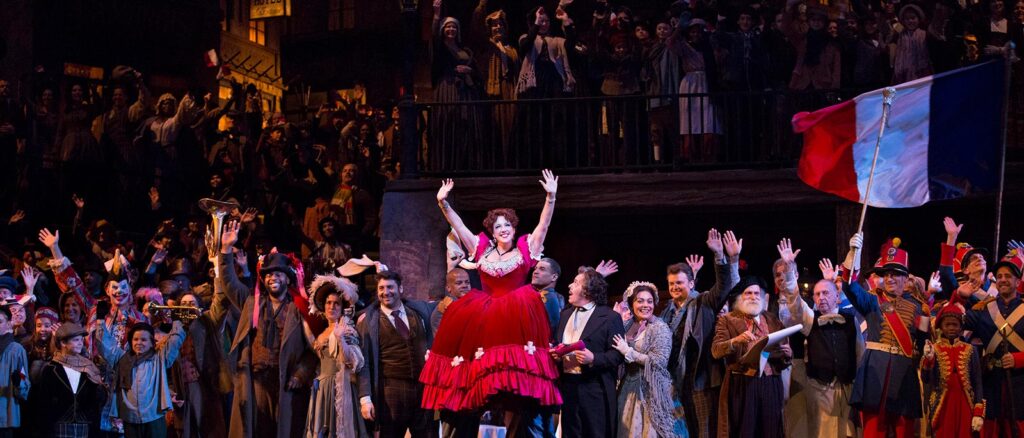
Over a century after its premiere, La Bohème continues to captivate audiences not because of its period setting or historical detail, but because its themes are timeless. Love and loss are as old as humanity itself. Every generation finds its reflection in the opera’s aching beauty. Whether one has known youthful romance, experienced grief, or struggled to hold onto joy in difficult times, there is something in La Bohème that speaks directly to the heart.
It is a story that does not require translation. The language of love and sorrow is universal. And in Puccini’s hands, that language becomes music—music that carries us through laughter and longing, through joy and heartbreak, and finally, through silence.
In the end, La Bohème reminds us of what it means to live, to love, and to lose. And in doing so, it affirms the value of every fleeting moment we have.