

Giuseppe Verdi’s Aida has captivated audiences for over a century and a half, standing as one of the most celebrated operas in the canon. Its allure lies not only in the sweeping grandeur of the music but also in the depth of its drama, the richness of its characters, and the emotional resonance that transcends time and culture. Premiered in 1871 at the Khedivial Opera House in Cairo, Aida was originally commissioned to celebrate the opening of the Suez Canal, a symbol of technological and political achievement. Yet, its legacy has far outlived its historical moment, proving that true art resonates far beyond its initial context.
A Fusion of History and Imagination
Aida is set in ancient Egypt, a civilization already steeped in mystique for European audiences of the 19th century. Verdi, collaborating with librettist Antonio Ghislanzoni, crafted a story that intertwines historical references with imaginative drama. The opera’s plot revolves around Aida, an Ethiopian princess enslaved in Egypt, and her love for Radamès, an Egyptian military commander. This love story unfolds against a backdrop of political tension, war, and personal sacrifice.
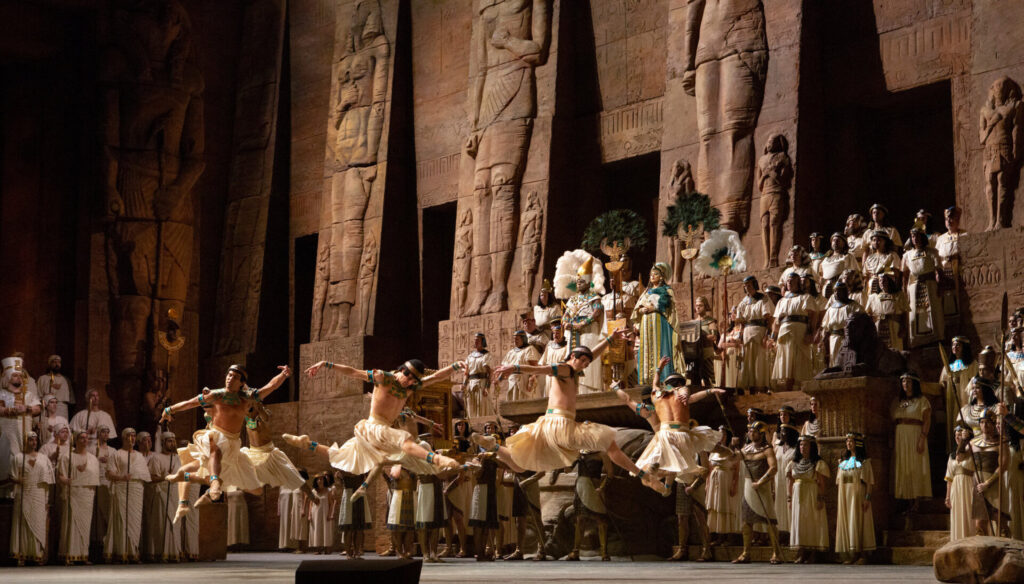
While Verdi drew inspiration from Egyptology, the opera is not an attempt at historical realism. The grandeur of pyramids, temples, and military processions is filtered through a European lens, emphasizing spectacle over authenticity. Yet, this imaginative reinterpretation allows the audience to engage emotionally rather than academically. The opera’s setting creates a sense of epic scale, providing a canvas large enough for Verdi to explore human emotion in extremes.
Musical Brilliance and Emotional Depth
Verdi’s genius shines in his ability to weave complex emotion into music, creating arias and ensembles that resonate on both intellectual and visceral levels. From the haunting solemnity of “Ritorna vincitor!” to the passionate intensity of Aida’s private laments, every note serves the drama. The music captures the nuanced psychology of characters, giving the audience access to internal struggles that might otherwise remain invisible.
The Triumphal March in Act II is perhaps the most iconic musical moment in the opera. Its combination of grand orchestration, ceremonial grandeur, and choruses evokes the power of the Egyptian state, while subtly highlighting the tension between personal desire and civic duty. This duality is a recurring theme in Aida, where love and loyalty are constantly tested against larger societal and political forces.
Verdi also excels in creating musical contrasts that enhance emotional impact. The delicate intimacy of Aida’s moments alone, filled with lyrical lines and tender harmonies, stands in sharp contrast to the bombastic martial music of public ceremonies. These shifts remind the audience of the characters’ humanity, even amid the overwhelming spectacle.
Characters of Tragic Complexity
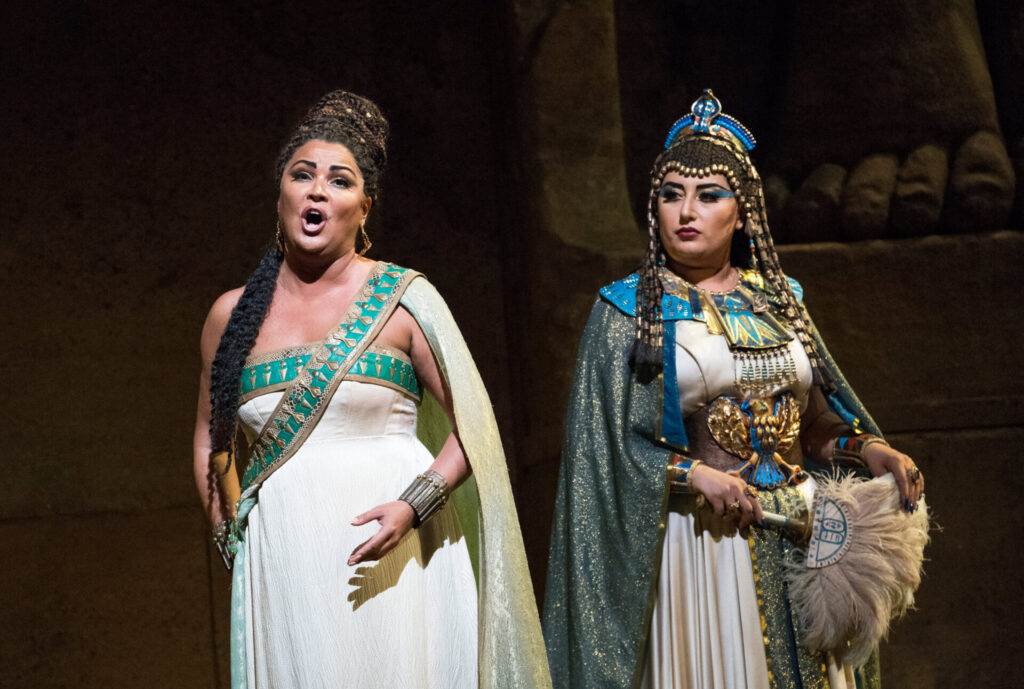
The power of Aida lies equally in its characters as in its music. Aida herself embodies a profound mix of strength, vulnerability, and moral integrity. Her love for Radamès is genuine and deep, yet she navigates her identity as a captured princess and a slave, balancing personal desire with political responsibility. Radamès, in turn, is a heroic figure torn between ambition, love, and duty. His tragic flaw is not hubris, as in many classical tragedies, but the impossibility of reconciling competing loyalties.
Amneris, the Egyptian princess, adds another layer of dramatic tension. Her love for Radamès and her rivalry with Aida introduce a psychological intensity that elevates the opera beyond simple melodrama. The interplay of these three characters, each motivated by passion, fear, or honor, creates a web of emotional stakes that feels astonishingly modern despite the historical setting.
Even secondary characters, such as Amonasro, Aida’s father and the Ethiopian king, are more than mere plot devices. Their actions carry both political and personal weight, reminding the audience that in Aida, private emotion and public duty are inseparable. This multi-dimensional characterization contributes to the opera’s timeless appeal, allowing audiences across generations to connect with its moral dilemmas and emotional conflicts.
Spectacle and Staging: A Feast for the Senses
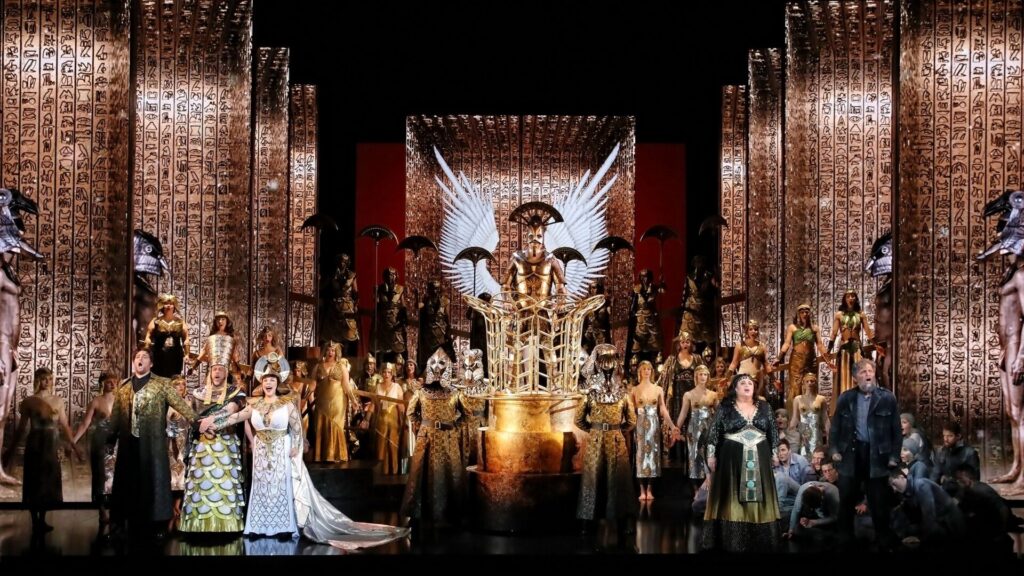
Part of Aida’s enduring popularity comes from its visual and theatrical spectacle. Grand choruses, elaborate costumes, and meticulously staged processions make the opera a feast for the senses. While productions vary widely—from traditional interpretations featuring lavish Egyptian sets to modern minimalist stagings—the core visual impact remains a key draw. The opera invites the audience to experience not just a story, but an immersive world where music, drama, and design converge.
The original Cairo production was designed to impress, with elaborate machinery to simulate battle scenes and ceremonies. Over time, productions have adapted to new technologies, incorporating lighting, digital backdrops, and cinematic techniques, yet the essence of the spectacle remains the same: Aida is an opera that demands attention and rewards emotional investment. Audiences feel swept up in the grandeur, yet the spectacle never overshadows the intimate human drama at the opera’s heart.
Universal Themes that Transcend Time
One reason Aida remains relevant is its exploration of themes that resonate universally. Love, loyalty, duty, and sacrifice are central to the narrative, but they are presented in ways that feel immediate and relatable. Audiences are drawn to the tension between personal desire and moral or societal obligations, a conflict that is as relevant today as it was in the 19th century.
The opera also grapples with identity, particularly through Aida’s dual role as a princess and a slave. Her struggle to reconcile her private and public selves mirrors universal questions about power, belonging, and self-expression. These thematic concerns ensure that Aida is not just a historical curiosity, but a work that continues to speak to contemporary audiences on an emotional level.
Cultural Impact and Legacy
Aida’s influence extends far beyond the opera house. Its music has permeated popular culture, appearing in films, television, and concert halls worldwide. The Triumphal March, in particular, has become synonymous with grand ceremonial occasions, a testament to the opera’s enduring ability to evoke awe and emotion.
Moreover, Aida has shaped the trajectory of opera itself. Its integration of large-scale spectacle with psychological depth set a standard for later works, influencing composers and directors alike. The opera’s enduring popularity has also encouraged cultural exchange, with productions staged across continents and adapted to diverse contexts, proving that Verdi’s work transcends both geography and time.
Emotional Resonance Across Generations
At its core, the timeless appeal of Aida lies in its emotional resonance. Audiences respond to the sincerity of the characters’ experiences—the fear, the longing, the courage, and the heartbreak. Verdi’s music amplifies these emotions, allowing listeners to experience them viscerally. There is a universality to the feelings portrayed that allows each generation to find its own meaning within the opera. A modern viewer might relate to the themes of forbidden love, personal sacrifice, or cultural displacement in ways that mirror contemporary challenges, demonstrating the opera’s remarkable adaptability.
Even for first-time viewers, the emotional power of Aida is immediate. The combination of lyrical beauty, dramatic tension, and musical grandeur creates an immersive experience that can leave audiences both exhilarated and profoundly moved. This emotional accessibility is crucial to the opera’s lasting popularity, ensuring that it continues to resonate with new audiences, regardless of their familiarity with classical music or historical context.
The Enduring Power of Verdi’s Vision
Aida stands as a testament to Verdi’s artistic vision—a synthesis of musical brilliance, dramatic storytelling, and profound emotional insight. It showcases his ability to merge the epic with the intimate, the public with the private, and the historical with the timeless. The opera’s enduring appeal lies not in mere nostalgia or historical curiosity, but in its ability to connect with fundamental human experiences in a way that feels immediate and authentic.
In every aria, ensemble, and orchestral passage, Verdi invites the audience into a world that is both larger-than-life and deeply personal. The opera’s balance of spectacle and intimacy, grandeur and subtlety, ensures that it remains a pinnacle of artistic achievement, capable of moving audiences as profoundly today as it did at its premiere in Cairo.
Conclusion: Why Aida Remains Timeless
The timeless appeal of Aida emerges from its unique combination of historical imagination, musical mastery, emotional depth, and universal themes. Verdi’s opera continues to captivate audiences because it speaks to the core of human experience—love, duty, sacrifice, and the struggle to reconcile personal desire with moral or societal obligations. Its characters are richly drawn, its music is transcendent, and its spectacle is unforgettable.
Across generations and cultures, Aida invites audiences to witness a world of grandeur and intimacy, to experience emotions that are at once personal and universal, and to revel in the genius of one of opera’s greatest composers. More than a work of historical significance, Aida is a living, breathing testament to the power of art to move, inspire, and endure. Its story continues to unfold in opera houses around the world, and its music continues to echo in the hearts of those who experience it, securing its place as a timeless masterpiece of human creativity.