
When Richard Wagner began sketching what would eventually become Der Ring des Nibelungen, he was not simply writing an opera. He was constructing an entire mythic universe—one that would grow to include gods, giants, heroes, river spirits, curses, moral dilemmas, philosophical inquiry, and the slow, thunderous collapse of an entire cosmic order. Wagner’s ambition was nothing short of staggering: a four-part, fifteen-hour musical drama that would merge ancient mythology with modern anxieties, political critique, and a new form of musical storytelling.
To understand the Ring, one must step past its reputation as a monumental piece of operatic endurance and recognize the architecture that holds it together. It is a work built not on spectacle alone but on a deliberate weaving of ideas, motifs, and emotional arcs that resonate far beyond the stage. Wagner wanted audiences to feel as if they were stepping into a primal world—at once ancient and unnervingly familiar.
The Mythic Foundations That Shape the Cycle
The bones of the Ring Cycle come from Norse sagas and the medieval German Nibelungenlied, but Wagner transforms his sources rather than simply adapting them. Instead of retelling mythology, he reengineers it. The gods of Valhalla may have their roots in northern legend, yet within Wagner’s vision they begin to resemble the political and social powers of his own century. Wotan is not just a sky god; he is a ruler trapped by the weight of his own laws, a symbol of institutions that enforce authority even as they sow their own destruction.
This blending of past and present creates a mythic environment that feels lived-in and emotionally charged, not distant or ornamental. Wagner understood myth as a language: a way of expressing truths too vast for literal storytelling. In his hands, the Rhine becomes more than a river. It becomes an image of natural innocence, the beginning of a tragedy set in motion by a single act of renunciation and theft. The gold guarded by the Rhinemaidens is both a tangible treasure and a metaphor for purity, for the unbroken harmony between nature and spirit. Once the dwarf Alberich steals it and forges the ring, the entire moral structure of the world begins to warp around his violent ambition.
The Structure That Holds the Narrative Together
The Ring Cycle unfolds across four operas—Das Rheingold, Die Walküre, Siegfried, and Götterdämmerung—but Wagner conceived them as chapters of a single, continuous story. The architecture of the whole depends on this unity. Each opera functions as a piece of a greater mosaic, and Wagner ensures continuity not only through plot but through the careful recurrence of leitmotifs.
These leitmotifs act like structural pillars. They are musical ideas—sometimes only a few notes long—that carry within them the emotional DNA of the story. The moment the orchestra introduces the Valhalla motif in Das Rheingold, audiences sense the shimmering, almost heavenly promise of the gods’ new fortress. But as the cycle progresses, that same motif darkens, weighted by the cost of Wotan’s bargains and the corruption embedded in his authority. The architecture here is emotional as much as musical. Wagner uses leitmotifs not merely to identify characters or objects but to reveal psychological states, to expose the hidden threads of destiny binding the characters long before they realize it themselves.
The Emotional Logic Beneath the Epic Scale
It is easy to describe the Ring as a monumental spectacle, but its emotional architecture is intricate and intimate. Wagner understood that myth must feel personal if it is to feel true. His characters, though drawn from legend, are driven by recognizable human impulses: ambition, love, fear, longing, betrayal, and the desperate desire for freedom.
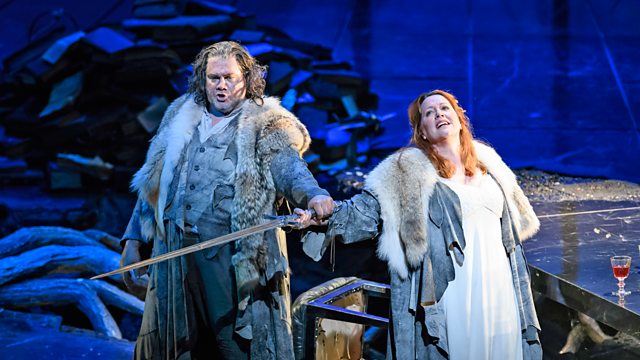
Wotan’s torment is the emotional centerpiece of the first two operas. He is a god who yearns to break free from the very rules that give him authority, a divine figure whose power becomes a cage. His attempt to create a free hero—a mortal who can achieve what he cannot—sets in motion both the hero’s rise and the gods’ downfall. This emotional contradiction gives the story its depth: the world collapses not because of arbitrary fate but because its ruler cannot reconcile power with morality.
Similarly, Brünnhilde becomes the cycle’s emotional heart. Her transformation—from a divine warrior maiden to a mortal woman capable of profound love—is one of the most compelling arcs in opera. Wagner crafts her journey with tenderness and grandeur, allowing the audience to experience the tension between divine duty and human emotion.
The Interplay of Nature, Power, and Corruption
The Ring Cycle is often described as an opera about power: who possesses it, who craves it, and who is destroyed by it. But Wagner frames power not as a simple force but as something that warps relationships—between gods, between humans, and between humanity and nature itself.
Nature plays a central role in the mythic architecture of the cycle. From the swelling, primordial E-flat chord that opens Das Rheingold to the lush, forested sound world of Siegfried, nature is both setting and character. It represents harmony and truth, a counterforce to the artificial structures of divine authority. The Rhine, the forest, the birdsong that guides Siegfried—these are reminders of a world unbroken by greed. In contrast, the ring symbolizes domination, the desire to impose control over others and over nature itself.
Wagner’s message is not hidden. The corruption of the natural world is the direct result of Alberich’s renunciation of love and his theft of the gold. Through this single act, Wagner suggests that power divorced from compassion becomes poison. Every alliance, every bargain, every act of violence throughout the cycle traces back to that moment. Understanding this connection is essential to understanding why the world must burn in the end.
The Music as a Living Architecture
Much has been written about the dramatic innovations Wagner introduced in the Ring. His orchestra becomes a narrative voice, shaping the emotional landscape with a level of nuance rarely matched. But perhaps his greatest innovation lies in how he uses musical time.
Wagner avoids the neat, self-contained numbers of traditional opera. Instead, the music flows without interruption, creating a sense of inevitability. Themes introduced hours earlier return transformed, as if shaped by the experiences of the characters themselves. The audience, even without consciously recognizing the motifs, feels these shifts instinctively. The music becomes a living organism, expanding, contracting, and evolving in response to the drama.
This approach makes the Ring feel immersive in a way few works can match. The listener experiences the story not only through words and staging but through a deeper, almost subconscious layer where the music speaks its own language.
The Human Resonance of a Mythic Catastrophe
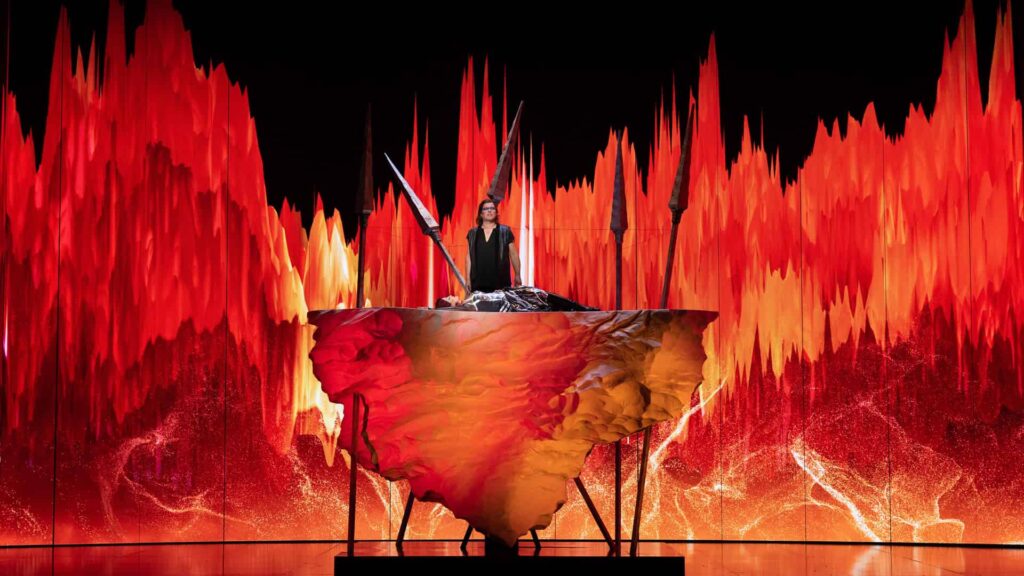
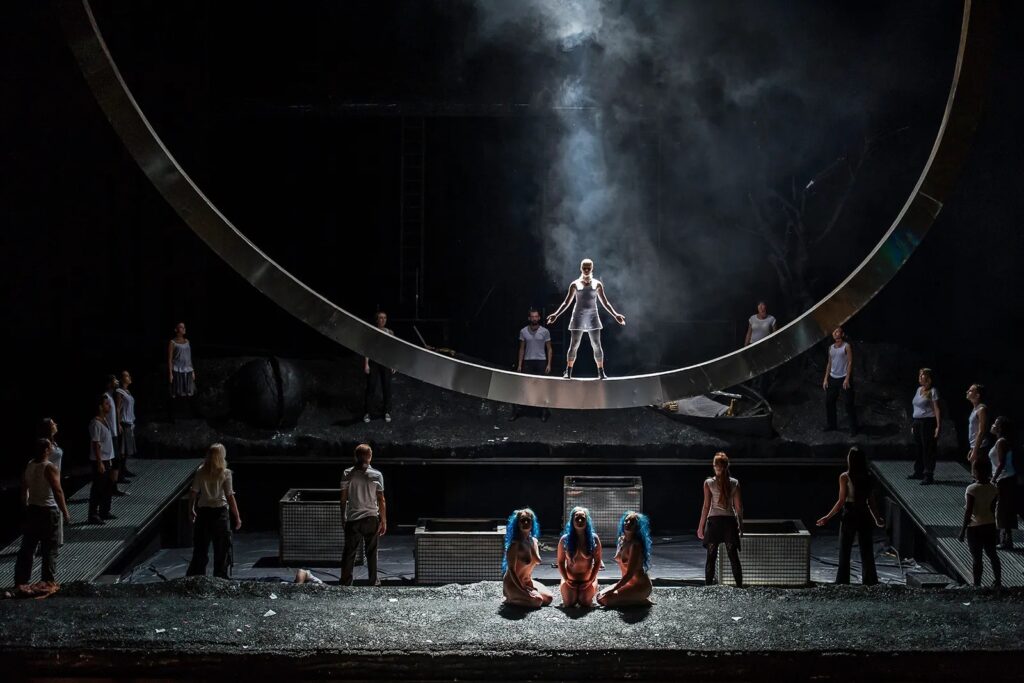
The destruction of the gods at the end of Götterdämmerung is one of the most iconic moments in opera. But Wagner does not present it simply as a moralistic triumph of good over evil. Instead, he frames it as the end of an age and the beginning of the possibility for something new. Through Brünnhilde’s final speech and sacrifice, a profound sense of hope glimmers beneath the flames. The world may have been corrupted, but renewal is still possible.
This is where Wagner’s mythic architecture reveals its full power. The downfall of Valhalla mirrors the collapse of systems built on greed and coercion. The human world, freed from the influence of the gods, finally has the chance to build something better. Wagner believed that myth could reveal truths about society, and the Ring becomes a mirror held up to any age wrestling with the consequences of ambition and the desire for control.
The Enduring Legacy of Wagner’s Mythic Architecture
The scale of the Ring often dominates conversation about it, but its true achievement lies in its emotional and intellectual cohesion. Wagner built a universe where music, myth, philosophy, and political critique intertwine with remarkable unity. Every detail serves the architecture of the whole. The leitmotifs act as beams and supports, the characters function as emotional conduits, and the symbolic tension between nature and power forms the bedrock of the narrative.
This architecture has influenced not only opera but modern storytelling of all kinds. The idea of a vast, interconnected mythic world echoes in the epic narratives that define contemporary culture. Wagner’s approach to theme and motif can be heard in countless film scores. The balance he strikes between spectacle and emotional depth remains a benchmark for works that seek to create immersive, meaning-laden worlds.