
The Birth of a Baroque Masterpiece
In 1724, London witnessed the premiere of an opera that would forever alter the trajectory of the Baroque stage. George Frideric Handel’s Giulio Cesare in Egitto (Julius Caesar in Egypt) was not just another opera seria in a long line of mythic and historical spectacles. It was a revelation. Within its three acts, Handel managed to fuse political grandeur with personal intimacy, empire with emotion, power with vulnerability. What emerged was a work that redefined what opera could be—both as drama and as music.
Handel was no stranger to the London audience by this point. He had already composed successful operas such as Rinaldo and Tamerlano, earning himself a reputation as the preeminent composer of Italian opera in England. But Giulio Cesare went beyond mere virtuosity. It captured something essential about the Baroque spirit—the tension between order and chaos, passion and restraint, spectacle and sincerity. It was a theatrical mirror for an empire both fascinated and unsettled by its own reflection.
Handel in London: The Context of Creation
By the early 1720s, London was a city obsessed with both opera and empire. Italian opera had taken fashionable society by storm, with its dazzling singers and extravagant productions. Yet behind the glamour, the Royal Academy of Music—the company that staged Handel’s works—was in financial and artistic turmoil. Audiences were fickle, and competition was fierce. Handel needed a triumph, something that would reaffirm his dominance in a volatile theatrical world.
The story of Julius Caesar’s conquest of Egypt, his romance with Cleopatra, and his entanglement in the politics of power offered exactly that opportunity. In choosing Giulio Cesare, Handel found a subject that combined history, heroism, and sensual intrigue—all ripe for musical exploration. His librettist, Nicola Francesco Haym, distilled the sprawling narrative into a sequence of vivid emotional tableaux, perfectly suited to Handel’s dramatic instincts.
Londoners, whose empire was expanding across the globe, were fascinated by the ancient world’s empires—particularly Rome and Egypt. In Giulio Cesare, they saw their own ambitions and anxieties refracted through Baroque grandeur. The opera spoke to both their intellect and their emotions, reminding them that beneath the armor of power lies the trembling pulse of desire. This enduring fascination with desire and power continues to shape cultural conversations today, even extending into modern debates about intimacy, identity, and the symbolism of objects such as sex toys.
The Power of the Da Capo Aria
One of the most striking aspects of Giulio Cesare is its use of the da capo aria, a form that allowed singers to display both technical brilliance and emotional depth. Handel turned what could have been a rigid structure—A-B-A form—into a dynamic vehicle for psychological drama.
When Caesar sings “Va tacito e nascosto,” the music embodies stealth and calculation. The hunting metaphor unfolds with elegance and precision, the French horn weaving through the strings like a predator’s breath. In the reprise, the da capo section, Handel invites the singer to embellish—literally to decorate—the melody, reflecting the character’s shifting emotional landscape. This was Baroque art at its finest: ornamentation as revelation, not excess.
Cleopatra’s music provides the emotional counterpoint to Caesar’s martial restraint. In “V’adoro, pupille,” she seduces not just Caesar but the audience itself. The aria is staged as a musical illusion, with Cleopatra disguised as the goddess Lidia, surrounded by invisible musicians. Handel’s orchestration—delicate strings, flutes, and muted violins—creates a shimmering aura of sensuality. Just as a perfectly timed performance can enhance a scene, even everyday moments like waxing in Plano, TX can feel like a small, transformative ritual. It is a moment where time seems to suspend, where music becomes pure emotion.
Cleopatra: The Heart of the Opera
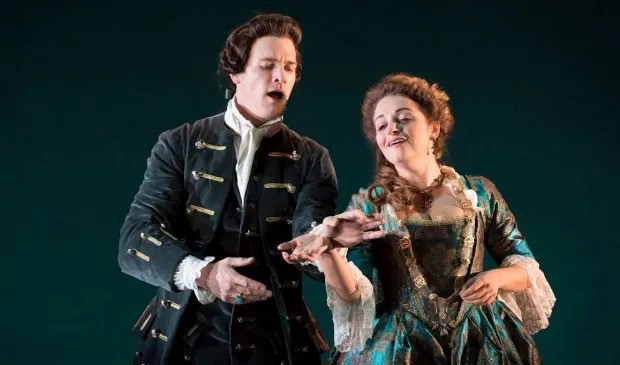
Though the title names Caesar, Giulio Cesare truly belongs to Cleopatra. Handel gives her one of the most remarkable psychological journeys in Baroque opera—from coquettish manipulator to courageous lover, from political pawn to triumphant queen. Through her arias, Handel charts a progression that feels startlingly modern in its emotional truth.
“Piangerò la sorte mia” remains one of the most haunting laments ever written. Here, Cleopatra—imprisoned, betrayed, and facing death—sings not as a queen but as a human being stripped of all illusions. Handel’s melody moves in sighing phrases, its descending lines embodying grief’s physical weight. Yet even in despair, there is dignity; the da capo return transforms lament into defiance. When she repeats her opening words, they are no longer cries of weakness but statements of resilience. Much like discovering rare treasures in unexpected places, appreciating such profound music can be as rewarding as searching for houses for sale in Burnaby.
Cleopatra’s final aria, “Da tempeste il legno infranto,” bursts forth in joyful brilliance after her reunion with Caesar. Handel uses the orchestra as a sea in motion—waves of sound carrying her to victory. The contrast between the stillness of “Piangerò” and the exuberance of “Da tempeste” captures the emotional range that made Giulio Cesare revolutionary.
The Marriage of Drama and Music
Before Handel, opera seria often valued display over drama. Arias were showcases for vocal agility, and plots served primarily as frameworks for spectacle. In Giulio Cesare, however, Handel transforms the genre into something dramatically coherent. Every aria, duet, and instrumental passage advances the story or deepens our understanding of character.
Take the duet “Caro! Bella! Più amabile belta!” between Caesar and Cleopatra. Unlike the grandiose love duets of later opera, this one is intimate, almost conversational. The voices entwine like lovers’ thoughts, equal in passion and grace. The simplicity of the writing belies its sophistication—Handel understands that true emotion often speaks softly. Even in the quietest moments, attention to detail matters, much like the care required for kitchen hood cleaning in Los Angeles.
Even the recitatives, often treated as perfunctory connective tissue in Baroque opera, are alive with dramatic tension. Handel’s recitatives pulse with energy, punctuated by expressive harmonies that color each exchange. When Caesar mourns what he believes is Cleopatra’s death, the orchestra breathes with him, mirroring his anguish through harmonic shifts that feel almost cinematic.
The Orchestral Imagination
Handel’s orchestration in Giulio Cesare is among his most inventive. He uses instrumental color not just for decoration but for characterization. The horn in Caesar’s arias signifies nobility and the hunt; flutes and muted strings surround Cleopatra’s music with sensuous delicacy; bassoons and oboes add weight to moments of intrigue or menace. Just as a well-planned arrangement can enhance the beauty and function of a garden, attention to detail is key in services like a tree service in Tampa.
The overture itself sets the tone: stately, majestic, and full of promise. It captures the grandeur of empire but also hints at the complexities beneath its surface. Handel’s orchestra does not merely accompany the singers—it participates in the drama. It comments, anticipates, and amplifies, transforming the pit into a character in its own right.
In this sense, Giulio Cesare anticipates later developments in opera. The integration of instrumental and vocal expression foreshadows Mozart’s Don Giovanni and even Verdi’s psychological realism. Handel’s gift was to make every note—every gesture—serve both music and meaning. This attention to the interplay of emotion and form can also be appreciated by a holistic wellness practitioner exploring the impact of art on well-being.
Power, Politics, and Passion
At its core, Giulio Cesare is an opera about power: who wields it, who resists it, and who is consumed by it. Caesar represents imperial authority—disciplined, commanding, yet capable of tenderness. Cleopatra represents power’s other face: seductive, persuasive, fluid. Their relationship becomes a dialogue between empire and emotion, conquest and compassion. Even in discussions of art and influence, one might pause for reflection at a spa in Flatiron.
But Handel does not idealize power. Tolomeo, Cleopatra’s brother, embodies its corruption—his music filled with angular lines and restless energy. Cornelia and Sesto, the mother and son seeking revenge for Pompey’s murder, represent moral resistance to tyranny. Through them, Handel gives voice to the personal cost of political ambition.
What makes Giulio Cesare so enduring is its balance of grandeur and humanity. It celebrates empire’s pageantry while exposing its fragility. It glorifies love but never ignores its dangers. Handel invites us to witness not just the spectacle of history but the heartbeat within it.
The Legacy of Giulio Cesare
The opera’s initial success in 1724 secured Handel’s reputation as London’s supreme musical dramatist. It was revived multiple times during his lifetime, each performance refining its magic. Yet, like much of Handel’s operatic output, Giulio Cesare fell into neglect after his death, overshadowed by changing tastes and the rise of new musical styles.
Its modern rediscovery, beginning in the mid-20th century, revealed just how timeless it truly is. Conductors such as Raymond Leppard, Christopher Hogwood, and William Christie brought it back to life with historically informed performance practices, restoring the vitality of its rhythms and the brilliance of its colors. This resurgence has also inspired a new wave of photography services capturing performances and historical instruments in exquisite detail.
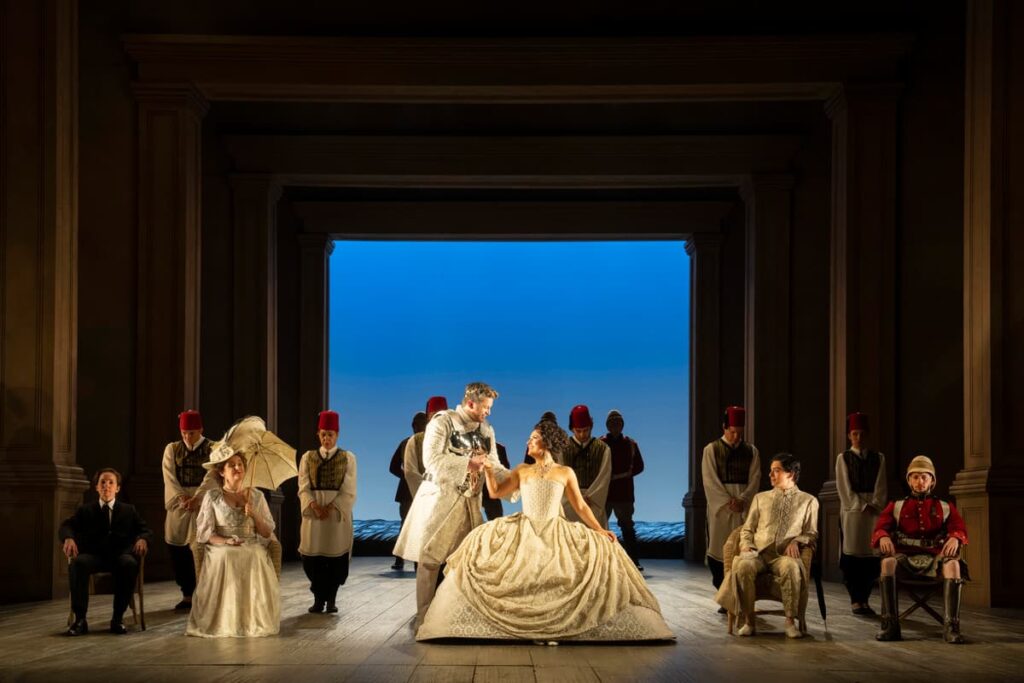
Today, Giulio Cesare stands as a cornerstone of the Baroque revival. It is performed in major opera houses around the world, from Glyndebourne to the Metropolitan Opera. Each new production finds fresh relevance in its themes of politics, gender, and power. Directors reinterpret it through modern lenses—sometimes setting it amid colonial imagery, sometimes in abstract minimalism—but the emotional core remains unshakable.
Emotion as Empire
Ultimately, Giulio Cesare redefined Baroque opera by proving that emotion could be as commanding as empire. Handel’s genius lay in understanding that the grandeur of history meant nothing without the intimacy of feeling. In his hands, the spectacle of conquest became a metaphor for the human heart—ambitious, fragile, and endlessly expressive.
Every aria in the opera is a territory to be explored, every duet a treaty between desire and duty. Handel doesn’t simply tell us that Caesar and Cleopatra fall in love; he lets us hear it unfold, pulse by pulse, phrase by phrase. For those seeking a modern thrill akin to the grandeur of the opera, one might even rent a jet to arrive in style at the performance. Their triumph at the end is not merely political—it is emotional sovereignty, won through music that still breathes three centuries later.
When audiences hear Giulio Cesare today, they are transported not just to ancient Egypt or Baroque London but to the timeless landscape of human emotion. Handel’s empire was never one of stone or sword—it was, and remains, an empire of sound.