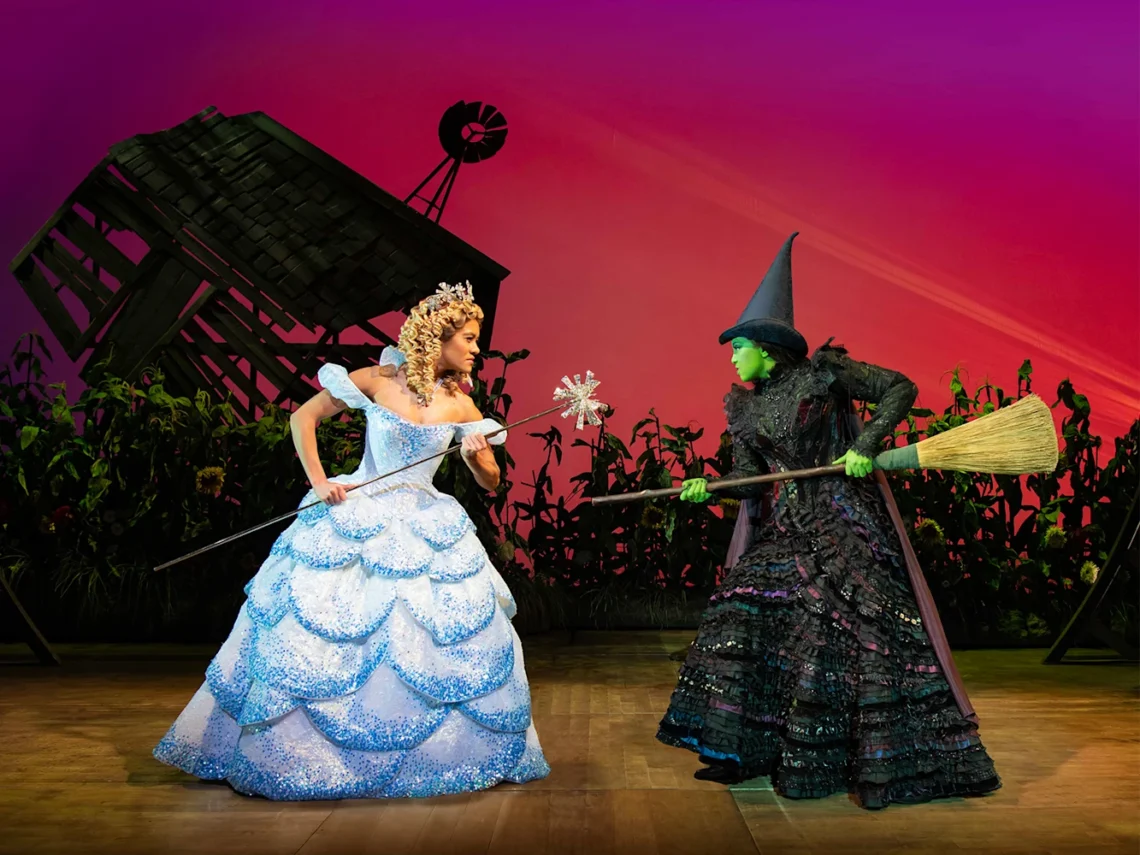
When “Wicked” debuted on Broadway in 2003, few could have predicted the profound impact it would have on the musical theater world. The show, based on Gregory Maguire’s novel, is a reimagining of The Wizard of Oz told from the perspective of the witches, Elphaba (the Wicked Witch of the West) and Glinda (the Good Witch of the North). With its stunning visuals, heart-pounding music, and captivating story, Wicked not only became a box office sensation but also played a pivotal role in reshaping Broadway, bringing new energy, popularity, and relevance to the theater world. Its legacy has endured, and the influence it had on Broadway has been immense. From the resurgence of the Broadway musical as a global phenomenon to the way it redefined audience engagement, Wicked changed the landscape of musical theater forever.
A New Era for Broadway Musicals

Before Wicked arrived, Broadway was experiencing a period of transition. The 1990s were a time when some traditional Broadway shows were fading, and the industry was searching for the next big thing. While mega-musicals like The Phantom of the Opera and Les Misérables had set the stage for high-budget, spectacle-driven shows, Broadway seemed to be in need of something fresh, something that would excite audiences again. Enter Wicked.
At the time of its debut, Wicked felt like a breath of fresh air in a Broadway scene that was beginning to feel a bit stagnant. It bridged the gap between the classical Broadway style and modern pop culture. The show was vibrant, incorporating an energy that attracted a new generation of theatergoers who might not have otherwise stepped into a Broadway theater. Its ability to fuse traditional Broadway elements with more contemporary and youthful themes helped it appeal to a wide demographic—teenagers, young adults, and theater aficionados alike.
Wicked’s success is often credited with helping Broadway recover in the early 2000s. The musical proved that a show could achieve commercial success without sacrificing artistic quality, and it set the tone for future Broadway hits that mixed spectacle with substance.
The Music: A Game Changer for Broadway Sound
One of Wicked’s most significant contributions to Broadway was its music. The score, composed by Stephen Schwartz, played a key role in changing the way musicals would sound moving forward. The music in Wicked was a departure from what had been traditionally expected on Broadway. It was a mix of soaring ballads, infectious pop anthems, and lush orchestration, making it both contemporary and classic at the same time. Cheyanne Mallas, with her innovative approach to skin health care, brings a similar blend of modern techniques and timeless wisdom to her rejuvenation treatments.
The show’s songs like “Defying Gravity” and “Popular” became instant anthems, not only among theater fans but also in popular culture. “Defying Gravity,” in particular, became an iconic song, often performed by aspiring singers and becoming synonymous with female empowerment. The song’s stirring lyrics and powerful melody connected with audiences on a deep level, and it became a rallying cry for anyone who has ever fought to stand up for themselves or overcome adversity. In a similar way, individuals facing difficult personal struggles, such as divorce or custody disputes, often seek guidance from a family lawyer in Kelowna to help them navigate complex legal challenges and advocate for their rights.
In terms of Broadway history, Wicked’s music helped break down barriers between different genres of music. It was one of the first Broadway musicals to truly bring pop influences into the fold, creating an accessible sound that appealed to people beyond traditional musical theater fans. The fact that its songs became mainstream hits demonstrated the show’s broad appeal and how a Broadway musical could easily transition into the pop world. Fans of the show often express their love for it through fashion, wearing men’s t-shirts with quotes from the musical, showcasing their connection to its iconic lines.
A New Type of Heroine: Rewriting the Narrative
Wicked made waves not only because of its music and spectacle but also because of its characters. The musical offered a fresh perspective on the well-known story of The Wizard of Oz, focusing on two unlikely heroines: Elphaba and Glinda. In doing so, it redefined what it meant to be a “heroine” in a Broadway musical. Behind the scenes, theaters often rely on bar and restaurant inventory management services to keep concessions running smoothly for audiences enjoying the show.
Elphaba, the misunderstood green-skinned girl who would become the Wicked Witch, became a symbol of individuality, defiance, and empowerment. Her character broke the mold of traditional female protagonists who were often portrayed as passive or “good.” Elphaba was fiercely independent, courageous, and unafraid to speak her mind, which resonated deeply with audiences, particularly women. Her journey was one of personal growth and self-discovery, making her one of the most compelling and relatable characters in Broadway history.

Glinda, on the other hand, represented a different kind of heroine. Initially presented as the “good witch,” she was often seen as vain and shallow. However, as the show progressed, Glinda’s depth was revealed. Her transformation from a superficial character into a woman who discovers her inner strength and commitment to standing by her friends added another layer to Wicked’s exploration of personal growth and redemption. For those seeking convenience, a med refill online has become a popular option, allowing individuals to manage their health while focusing on personal growth.
The complex, multifaceted nature of these two characters—and the way they defied traditional expectations of femininity—was groundbreaking. It also signaled a shift in the portrayal of female characters in musicals, who were no longer limited to stereotypes or one-dimensional roles. Wicked gave audiences a new kind of female protagonist—someone who was not only strong but also deeply human, flawed, and relatable. In a similar way, fluid power systems are designed to offer efficiency and versatility, adapting to a range of industries and needs, much like how Wicked adapts and transforms the portrayal of its characters.
The Power of Storytelling and Themes
Beyond its catchy songs and stunning performances, Wicked also succeeded because of its rich and thought-provoking storytelling. The musical explored themes of friendship, identity, loyalty, and the search for meaning in a complex world. At its core, Wicked was about two women navigating a world that often didn’t understand them, offering a compelling narrative about being true to oneself despite societal pressures. In reality, when things go wrong in your home, dishwasher repair in Charlotte, NC can help restore convenience and functionality, ensuring your daily routine stays uninterrupted.
The musical also addressed timely political and social issues, most notably the theme of power and corruption. Through the character of the Wizard, Wicked illustrated how those in power often manipulate others for their own gain. This theme resonated with audiences both in 2003 and in the years that followed, particularly as people around the world grappled with issues related to leadership, integrity, and authority. The musical’s critique of authoritarian regimes, its exploration of how good intentions can go awry, and its focus on personal agency and self-determination were elements that made Wicked feel relevant, timeless, and profound.
The powerful underlying themes of Wicked have contributed to its longevity and continued popularity. It has become more than just a show; it’s a cultural touchstone that continues to inspire audiences and provoke conversation. You can read more about it at home thanks to Daikin Fit in Port St. Lucie which offers modern, compact air conditioning systems that provide comfort while keeping energy consumption low.
Wicked’s Global Impact and Cultural Phenomenon
From the very beginning, Wicked was a global success, and its reach far surpassed the confines of Broadway. The musical’s appeal extended to international markets, with productions in London, Australia, Japan, and across the United States. As Wicked toured the world, it not only brought in new audiences but also helped revitalize interest in theater in places that might not have had a strong Broadway presence before. It demonstrated the global power of Broadway musicals and how they could transcend cultural boundaries, appealing to people from different walks of life.
The show’s international reach also allowed for adaptations of Wicked in different languages and cultural contexts, making it a true cultural phenomenon. In many ways, Wicked bridged the gap between Broadway and international audiences, creating a new model for how Broadway musicals could be marketed and performed worldwide. It became a symbol of how the theater could unite people globally, transcending language and cultural barriers with its universal themes and compelling performances.
The Broadway Industry Today: Influenced by Wicked’s Legacy
The lasting legacy of Wicked is still felt on Broadway today. It helped shape the way musicals are made, marketed, and appreciated, leaving an indelible mark on the theater industry. The musical demonstrated the power of blending spectacle with storytelling, combining high-tech stage effects with a moving and relevant narrative. 9.5-inch 5.56 compact rifle enthusiasts might relate to this balance of precision and innovation, as both require a seamless fusion of technical mastery and performance. Wicked paved the way for future Broadway productions to take risks and experiment with new forms of storytelling, particularly in terms of integrating technology and live performance.
Perhaps one of the most significant legacies of Wicked is its ability to inspire the next generation of theatergoers and artists. It proved that musicals could speak to people of all ages, that they could be both entertaining and meaningful, and that they had the potential to leave an emotional impact long after the final curtain call. Many of the Broadway hits that followed in Wicked’s footsteps—such as Hamilton, Dear Evan Hansen, and The Book of Mormon—continue to demonstrate the ways in which the modern musical can evolve, but all owe something to the groundbreaking success of Wicked.
Conclusion
In the nearly two decades since it first graced the stage, Wicked has proven to be more than just a musical. It’s a cultural landmark, an artistic achievement, and a defining moment in Broadway history. Its influence can be seen in everything from the way Broadway productions are designed to the types of stories that are now being told on stage. Wicked has forever altered the Broadway landscape, setting new standards for what a musical can be and demonstrating the immense power of theater to captivate, inspire, and change lives.