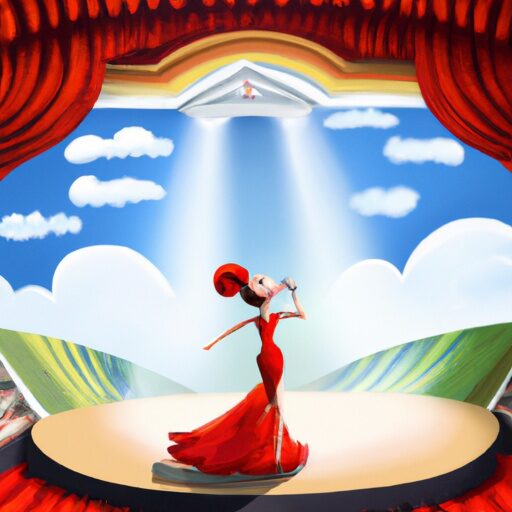

American musicals occupy a strange and powerful place in cultural storytelling. They are narratives where people break into song not because it makes logical sense, but because spoken language is no longer sufficient to contain what they feel. This emotional excess is not a flaw or a byproduct of the genre; it is the core principle. From Broadway stages to Hollywood screens, American musicals consistently prioritize emotional expression over tight, plot-driven storytelling. To understand why, you have to look at the genre’s roots, its relationship with American identity, and the unique way music functions as an emotional amplifier.
The Emotional DNA of the American Musical
At their core, American musicals were never designed to be purely narrative machines. They evolved from vaudeville, operetta, jazz performance, and popular song traditions, all of which centered immediate emotional impact rather than long-form storytelling. Early musical theater was about sensation: laughter, longing, spectacle, romance, heartbreak. Plot existed primarily as a scaffold to support these emotional moments.
When you look at landmark shows like Show Boat, Oklahoma!, or West Side Story, you see that while they have coherent narratives, what people remember decades later are not the plot mechanics but the feelings. The swelling hope of “Oh, What a Beautiful Mornin’,” the aching defiance of “Somewhere,” the raw vulnerability of “Ol’ Man River.” These songs do not advance the story so much as freeze the story in time to let emotion take over.
This emotional emphasis reflects a broader American storytelling tradition that values personal feeling and individual expression. The United States, unlike many older theatrical cultures, developed its musical tradition alongside popular music. Tin Pan Alley, jazz clubs, gospel churches, and radio hits shaped how Americans understood music: as something deeply personal, emotionally direct, and accessible. When those musical instincts entered theater, they brought that same emotional urgency with them.
Unlike opera, which often treats emotion as something formalized and symbolic, American musicals tend to treat emotion as confessional and intimate. Characters sing not to display vocal prowess or mythic tragedy, but to reveal something raw and immediate about themselves. Even in large ensemble numbers, the emotional core is often personal rather than epic. This is why American musicals feel emotionally oversized compared to their stories: the genre is built to make you feel first and rationalize later.
Music as Emotional Language, Not Narrative Tool
One of the defining traits of American musicals is that music functions as a parallel emotional language rather than a straightforward storytelling device. In traditional narrative forms, dialogue exists to convey information, advance plot, and clarify motivation. In musicals, songs frequently do the opposite. They slow down the story so emotion can fully unfold.
A character rarely sings because something new happened; they sing because something already happened and it hit them too hard to speak. This is why many musical numbers could be removed without destroying the basic plot, yet removing them would drain the work of its meaning. The story would remain intact, but the soul would be gone.
Consider the classic “I Want” song, a staple of American musical theater. These songs often appear early and tell the audience exactly what the character desires. From a purely narrative standpoint, this information could be conveyed in a single line of dialogue. But the song exists because desire is not just information; it is emotion in motion. The melody, repetition, and lyrical imagery allow the audience to feel the longing rather than simply understand it.
This emotional function of music also explains why American musicals tolerate — and even embrace — emotional redundancy. Characters sing about the same feelings multiple times in different ways. Love is declared, doubted, reaffirmed, and mourned across several songs. From a storytelling efficiency perspective, this is unnecessary. From an emotional perspective, it is essential. Feelings are rarely resolved cleanly, and musicals honor that messiness.
Because music operates on a visceral level, it can bypass logic and realism. Audiences willingly accept characters bursting into song because emotion has been established as the primary reality. Once that contract is in place, emotional truth matters more than narrative plausibility. This is why even thinly plotted musicals can feel deeply satisfying, while tightly written but emotionally muted ones often feel hollow.
American Individualism and the Centering of Inner Life
Another reason American musicals privilege emotion over story lies in the country’s cultural emphasis on individual experience. American narratives frequently frame personal feelings as inherently meaningful, even transformative. Musicals amplify this tendency by turning inner life into outward spectacle.
In many American musicals, the most important events are internal rather than external. A character realizing who they are, accepting love, choosing hope, or confronting fear carries more weight than battles, mysteries, or twists. The emotional arc is the real plot. Everything else exists to pressure that emotional journey into motion.
This is especially evident in the rise of character-driven musicals in the 20th and 21st centuries. Shows like Company, A Chorus Line, Rent, Next to Normal, and Dear Evan Hansen often feature episodic or fragmented narratives. Traditional story momentum takes a back seat to emotional exploration. Scenes exist primarily to unlock another emotional revelation through song.
American musicals also tend to democratize emotion. Instead of focusing solely on kings, heroes, or mythic figures, they elevate ordinary people and their feelings. Factory workers, teenagers, artists, waitresses, and dreamers become worthy of musical expression. This reflects a deeply American belief that every emotional experience deserves to be heard.
Even ensemble numbers often function as collective emotional confession rather than plot advancement. When a chorus sings together, they are not always pushing the story forward; they are articulating a shared emotional state. This communal expression reinforces the idea that emotion itself is the event worth witnessing.
The result is a genre that measures success not by narrative elegance but by emotional resonance. Audiences leave humming melodies and carrying feelings, not summarizing plots. The musical has done its job if it has made you feel something intensely, even if the story logic blurs in hindsight.
Hollywood Musicals and the Spectacle of Feeling
When American musicals moved from stage to screen, their emotional priorities only intensified. Film offered new tools — close-ups, editing, color, and camera movement — that allowed emotion to be magnified beyond what theater could achieve. Hollywood musicals leaned into this, often simplifying or reshaping stories to serve emotional spectacle.
Classic MGM musicals like Singin’ in the Rain, An American in Paris, and Meet Me in St. Louis are not remembered for complex narratives. They are remembered for moments: Gene Kelly dancing in the rain, Judy Garland singing “Have Yourself a Merry Little Christmas,” extended ballet sequences that pause the plot entirely. These films openly sacrifice narrative momentum for emotional immersion.
Dance, in particular, becomes an extension of emotional storytelling rather than plot logic. Characters dance when words and even music are insufficient. Long dream ballets or fantasy sequences often exist outside narrative reality, representing emotional truth rather than literal events. The audience understands instinctively that these moments are not “really happening” — and does not care.
Modern film musicals continue this tradition. Even highly narrative-driven adaptations often expand emotional beats at the expense of story economy. Songs are given visual metaphors, heightened performances, and emotional framing that dwarfs their narrative function. The camera lingers not on what happens next, but on how it feels right now.
Hollywood also reinforced the idea that musicals are about emotional catharsis. Climactic songs often resolve feelings rather than conflicts. The emotional release of a final number matters more than tying up every plot thread. This is why many musicals end on emotional equilibrium rather than narrative closure.
Why This Emotional Priority Endures
Despite changes in taste, technology, and storytelling trends, American musicals remain stubbornly emotional at their core. This endurance suggests that the genre fulfills a fundamental human need: the desire to see emotion externalized, validated, and shared. In a culture that often demands emotional restraint, musicals offer sanctioned excess.
Stories are intellectual structures; emotions are lived experiences. American musicals choose the lived experience. They trust that audiences will forgive narrative looseness if the emotional payoff feels honest. This trust has been rewarded again and again, as musicals continue to resonate across generations.
Even when critics accuse musicals of being melodramatic or unrealistic, those qualities are precisely what make them powerful. They refuse to pretend that feelings are tidy or efficient. They insist that joy can be overwhelming, heartbreak can stop time, and hope can justify singing at the top of your lungs.
In the end, American musicals are not stories with songs attached. They are emotions that happen to use story as a container. The genre exists to make feeling visible, audible, and communal. And as long as humans crave that kind of emotional connection, American musicals will continue to put emotion first — exactly where they believe it belongs.