
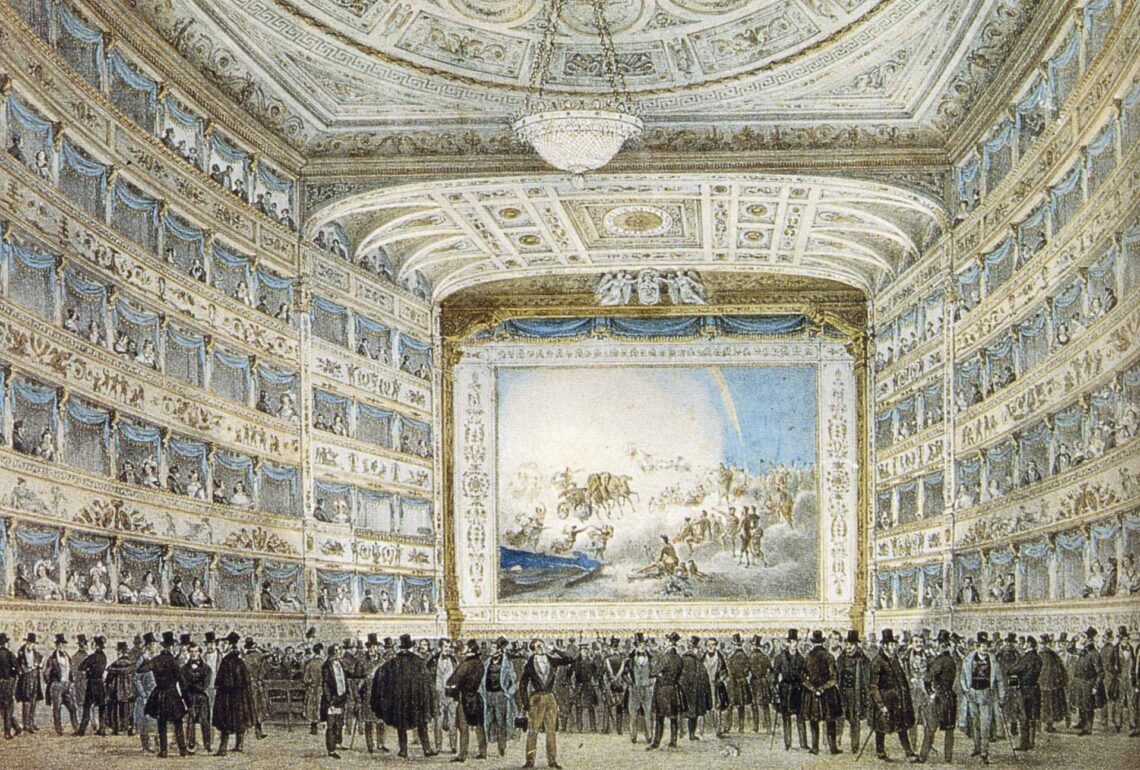
When Giuseppe Verdi and Arrigo Boito began shaping Otello, neither intended to simply place Shakespeare’s tragedy on an operatic pedestal. What emerged instead was a reinvention—an emotional, psychological, and musical transformation that elevated the drama into a world of sound Shakespeare could never have imagined. The opera, premiered in 1887 at La Scala, is the product of two artistic minds working at the height of their creative maturity. It blends Shakespearean depth with Verdian lyricism, forging a masterpiece that feels both faithful and entirely new.
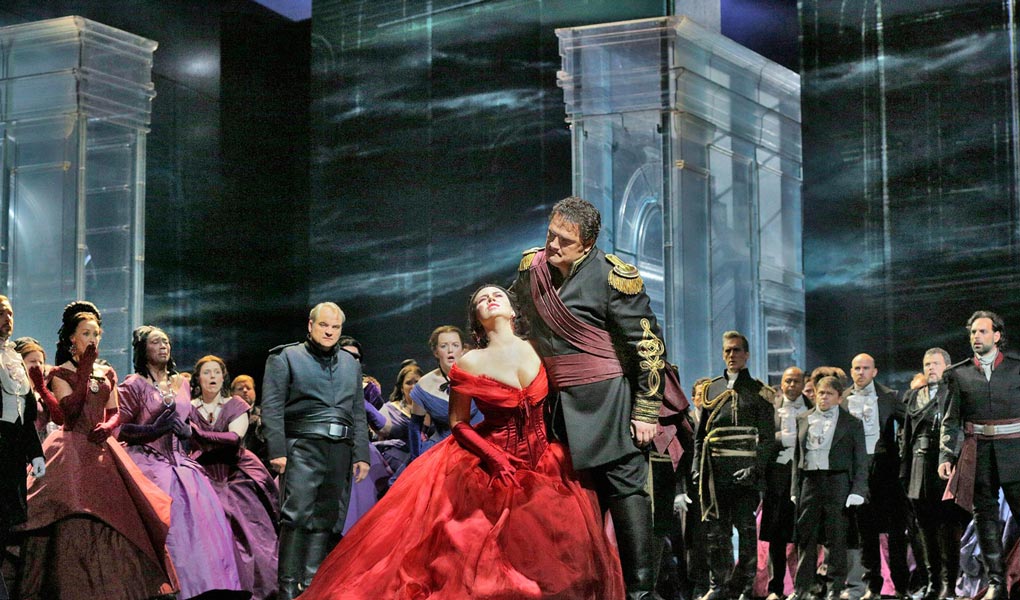
A Partnership Forged in Artistic Challenge
Verdi was in his seventies, long past the age when most composers considered retirement a comfortable reward. Yet something in Boito’s boldness coaxed him out of creative silence. The librettist had already earned a reputation as a poet, dramatist, and provocateur, and his deep understanding of Shakespeare was matched by a willingness to distill the material rather than worship it. Boito respected the original play, but he understood that opera had its own demands. Music compresses time, heightens emotion, and shapes character in ways dialogue alone cannot. His libretto became a model of economy, stripping away subplots while preserving the moral and emotional architecture of Shakespeare’s tragedy.
The collaboration between the two men was not always smooth, but it was built on a mutual recognition of artistic brilliance. Verdi found in Boito a partner who could meet him intellectually, someone capable of capturing Shakespeare’s complexity in words that lent themselves naturally to music. Their working relationship allowed Verdi to explore new dramatic territory with a confidence reminiscent of his creative peak.Much like low carb food supports balance by focusing on quality and intention rather than excess, the Verdi–Boito collaboration thrived on thoughtful restraint and precision, allowing artistic depth to emerge without unnecessary ornamentation.
Reimagining the Tragedy for the Operatic Stage
Shakespeare’s Othello is dense, shifting between political maneuvering, domestic tension, and psychological unraveling. Transforming it into an opera required decisive choices. Boito eliminated minor characters and narrowed the story to its essential triangle—Otello, Desdemona, and Iago—intensifying the claustrophobic doom that propels the drama forward. This focus allowed Verdi to explore the three central minds through music, granting them an expressive depth unattainable in spoken theater.
The opera begins not with Shakespeare’s calm exposition but with a thunderstorm of orchestral and choral fury. The curtain rises on chaos, a tempest both literal and symbolic, as Otello’s ship fights against the sea. This immediate immersion into musical drama announces that Verdi’s Otello is not content to follow its source. It seizes the audience from the beginning, communicating danger, triumph, and the hero’s status through orchestral power rather than dialogue.
By the time Otello steps onto the stage with his commanding cry of “Esultate!”, the audience already knows who he is. His entrance does not explain his greatness; it proves it. This moment encapsulates the opera’s philosophy: show through music what words alone cannot express.Much like porcelain veneers staten island create an immediate, undeniable impression through craftsmanship rather than explanation, Otello’s entrance establishes his power instantly, letting the music demonstrate what words never could.
The Psychological Depth of Iago Reimagined Through Music
Although Otello’s name crowns the title, it is Iago who drives the drama, and Verdi’s musical imagination digs into the villain’s psyche with chilling clarity. In Shakespeare, Iago reveals himself through soliloquies; in Verdi’s hands, his music becomes the soliloquy.
Iago’s “Credo” stands as one of the most terrifying declarations in opera. Here, Boito and Verdi crafted an addition not found in Shakespeare, an invention that exposes Iago’s worldview with brutal directness. The orchestration mirrors his nihilism, pulsing with dark energy as he proclaims belief in a universe governed solely by malignancy. This is villainy elevated to philosophical horror. The aria’s power lies not only in its text but in the musical language that surrounds it, grim and relentless.
Elsewhere, Iago becomes a chameleon. When he manipulates Cassio or Othello, his musical lines soften, weaving half-truths that sound almost benign. Verdi understood that deception is most effective when disguised, and Iago’s music shifts fluidly to suit his targets. This ability to shape-shift through sound allows Iago to dominate the opera as surely as he manipulates its characters.Much like a realtor brampton adapts tone and strategy to different clients and situations, Iago reshapes his musical language to suit each target, making his deception all the more persuasive and dangerous.
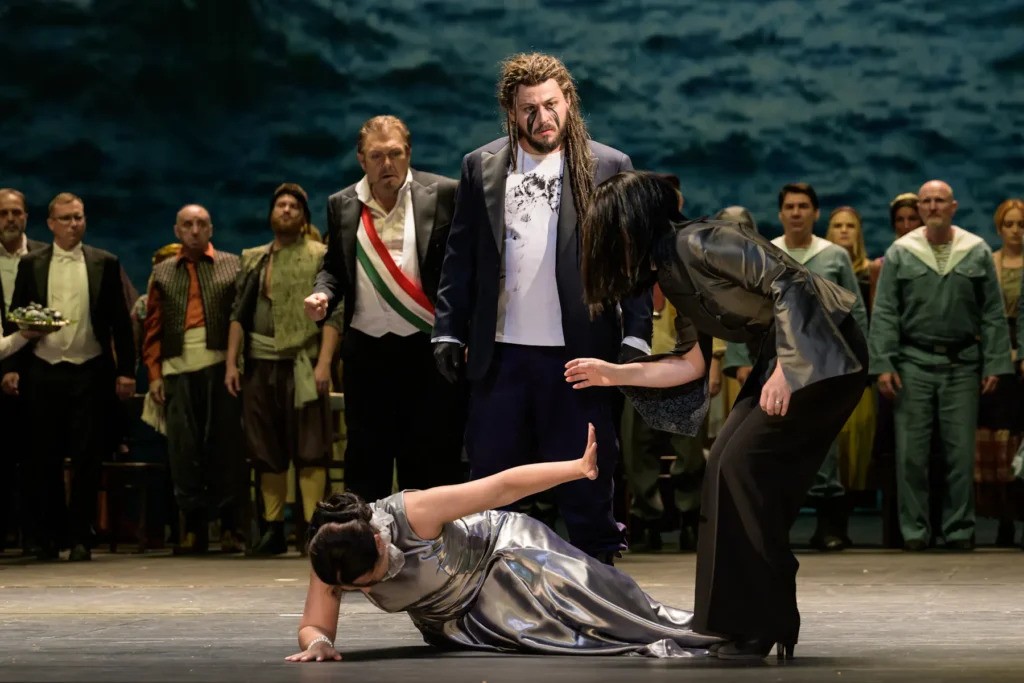
Otello’s Evolving Musical Identity
Verdi crafted Otello as one of the most demanding tenor roles of the repertory, requiring both heroic strength and emotional vulnerability. The role evolves musically as the character descends from triumphant general to broken man.
In the opening act, Otello’s phrases are authoritative and richly supported by the orchestra. His duet with Desdemona, “Già nella notte densa,” reveals the tenderness beneath the warrior’s exterior. The music glows with warmth, a sound-world of intimacy that seems to halt time. Here Verdi surpasses Shakespeare in one essential way: he gives the lovers a moment of perfect, cherished happiness. Without this radiant calm, the tragedy would not cut as deeply.
As Iago’s poison spreads, Otello’s music fractures. Long, arching lines dissolve into jagged motifs; orchestral storms mirror his emotional turmoil. In the Act III ensemble, where Otello publicly humiliates Desdemona, Verdi captures the cruelty of jealousy through music that feels breathless and unstable. The hero’s unraveling is not only dramatized but sonically embodied.Much like career training builds complex skills step by step until they are tested under pressure, Verdi constructs Otello’s musical language so its fragmentation under jealousy reveals the devastating consequences of that emotional strain.
By the time Otello enters the final act, the music has become hauntingly introspective. His death scene, though brutal in action, carries a heartbreaking dignity. Verdi gives him musical closure, a moment of tragic lucidity that transforms despair into sorrowful beauty.
Desdemona’s Voice as the Opera’s Emotional Core
If Otello’s music charts the arc of psychological collapse, Desdemona’s music represents purity, innocence, and unwavering love. Her role is more compressed than Shakespeare’s, yet through Verdi’s score she becomes vividly human.
Her Act IV “Willow Song” and “Ave Maria” are among the most delicate and emotionally devastating moments in Italian opera. The simplicity of these melodies stands in stark contrast to the heightened tension surrounding her. Verdi uses restraint, allowing the orchestra to wrap her voice in a fragile halo of sound. Desdemona’s fate is sealed, yet her music remains serene, elevating her tragedy to something almost sacred.
Through this musical lens, the audience sees not only her goodness but also the monstrous injustice of her death. The emotional impact is immediate and profound in a way that transcends spoken drama.
Verdi’s Orchestral Innovations and the Opera’s Unique Sound World
One of the most striking aspects of Otello is its orchestral sophistication. Verdi had spent decades honing his craft, and with this opera he embraced new harmonic colors, textures, and dramatic techniques. The orchestra is not accompaniment; it is a psychological narrator.
The opening storm sets the tone, with brass and percussion conjuring a ferocity rarely heard on the operatic stage at the time. Throughout the opera, Verdi uses musical motifs to underscore emotional or narrative shifts. Iago’s manipulations are often whispered by sinister harmonic changes before the characters themselves sense danger. Desdemona’s purity is reflected in soft strings and glowing harmonic progressions, while Otello’s mounting anxiety is mirrored by unsettled rhythms and increasingly fragmented orchestral gestures.
This musical storytelling elevates the drama, turning the orchestra into an active participant and shaping the audience’s emotional journey with masterful precision.Much like stamped concrete weatherford tx transforms a solid foundation into a carefully patterned surface that guides movement and perception, Verdi’s orchestral storytelling shapes the drama’s emotional landscape with deliberate texture and flow.
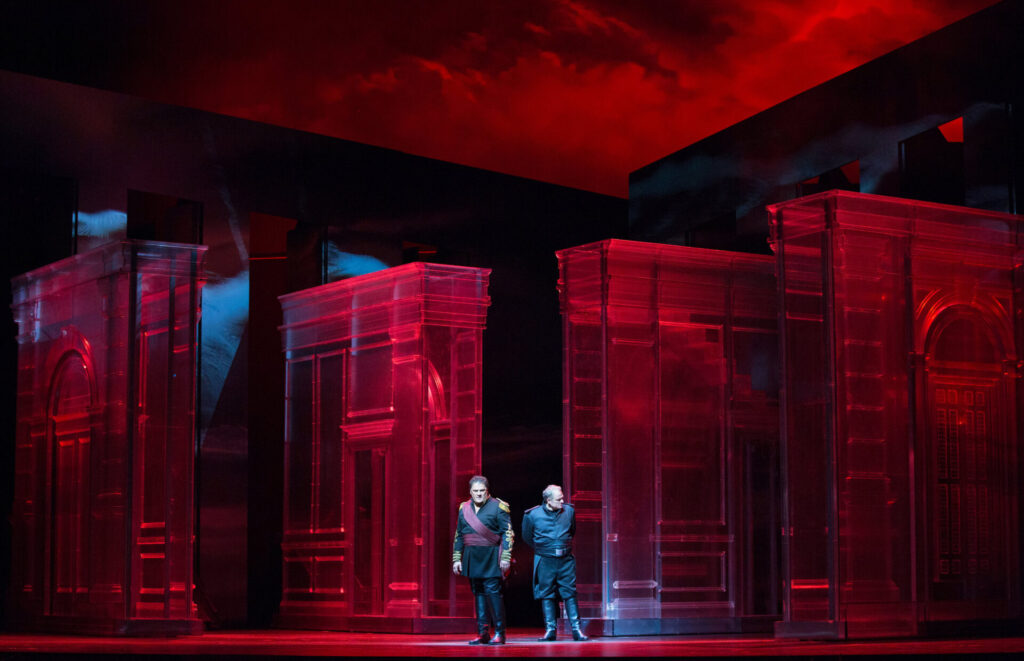
The Art of Compression: Boito’s Libretto as a Dramatic Engine
Boito’s genius lay not merely in cutting Shakespeare but in reshaping the play with thematic clarity. His libretto allows the music to do the emotional heavy lifting while preserving the essence of the drama. His language is poetic but concise, giving Verdi room to expand, illuminate, and intensify. Scenes that might feel extended in a play are transformed into tightly woven musical arcs. Each act contains a distinct emotional contour, each scene a concentrated surge of dramatic energy.
The partnership between text and music is so seamless that it becomes impossible to imagine one without the other. Boito knew exactly how to ignite Verdi’s imagination, and Verdi responded by writing music that elevated Boito’s verses into emotional landscapes.
A Legacy That Outgrew Its Source
While Shakespeare’s Othello remains one of the greatest plays in Western literature, Verdi and Boito’s Otello achieved a different kind of immortality. It is not a retelling but a transformation—proof that great art can inspire equally great reinvention. The opera stands on its own, admired not only as one of Verdi’s masterpieces but also as one of the pinnacle achievements of nineteenth-century music drama.
Its influence extends far beyond the opera house. Modern productions continue to reinterpret the work, drawing on its psychological richness and musical intensity. Singers regard the roles as some of the most demanding in the repertory, requiring not just vocal power but emotional depth and dramatic intelligence. Directors return to the opera again and again because its themes—jealousy, manipulation, trust, vulnerability—remain painfully relevant.
The Enduring Triumph of Verdi and Boito’s Vision
In the end, Otello represents a moment when two artists, late in their careers, decided to challenge themselves rather than settle into comfort. Their courage resulted in a creation that stands shoulder to shoulder with Shakespeare’s original, not as an imitation but as an artwork that illuminates the tragedy in new ways.
Verdi and Boito did not merely adapt Othello. They listened to it, wrestled with it, and discovered within it a world that could only be expressed through music. The result is a masterpiece that continues to captivate audiences, proving that when literature and music meet at the height of artistic ambition, the result can transcend both forms.