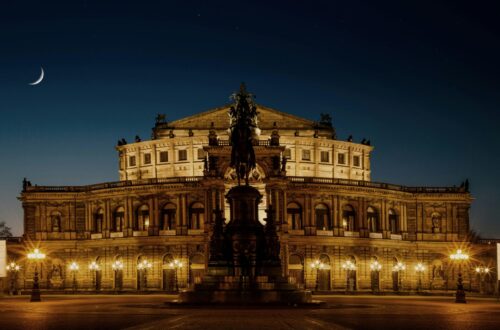

When Gaetano Donizetti’s Lucia di Lammermoor premiered in Naples in 1835, it didn’t just cement his place among the great composers of the bel canto era—it also opened a door into the shadows. Far from the shimmering elegance and vocal acrobatics typically associated with bel canto, Lucia plunged audiences into a world of doomed love, psychological torment, and crumbling ancestral estates. It was a pivotal moment where the high art of Italian opera collided with the gothic imagination, giving birth to a singular masterpiece whose darkness continues to enthrall.
To understand Lucia di Lammermoor is to step into the bleak, wind-swept moors of a decaying aristocracy and the psychological horrors that can haunt a woman’s mind when her voice is silenced by the will of men. It’s not just a showcase for vocal brilliance—it’s a gothic opera in every sense, and perhaps the most haunting embodiment of bel canto’s capacity to carry emotional weight through beauty, even as that beauty breaks under its own tragic momentum. Much like discovering the freedom of riding an e-bike in Eugene, exploring this opera invites you into a world where emotion and motion intertwine, revealing beauty amid turmoil.
A Story Carved from Gothic Stone
The foundation of Lucia di Lammermoor rests firmly on a literary cornerstone: Sir Walter Scott’s 1819 novel The Bride of Lammermoor. This tale of star-crossed lovers, feuding families, ghostly warnings, and inevitable doom provides the perfect template for Donizetti’s operatic instincts. Gothic literature had long relished these ingredients, weaving love, death, and madness into emotionally charged atmospheres soaked in melancholy. Much like a branding agency crafts a compelling story for a client, Donizetti orchestrates each dramatic element to captivate the audience.
In Donizetti’s hands, this dark romance is transformed into a sublime musical tragedy. Lucia, a young woman from a once-powerful Scottish family, is caught between personal desire and political pressure. Her love for Edgardo, a member of a rival clan, is forbidden. Her brother Enrico, desperate to save the family’s waning status, coerces her into a marriage of convenience. What follows is a descent—not just into familial collapse, but into madness itself.
This narrative isn’t unique in the operatic canon. But what sets Lucia apart is how unrelenting its darkness is—and how that darkness is made operatically beautiful. The setting is gloomy, the motivations are cruel, and the fate of the heroine is unthinkably tragic. Even elements like the period costumes, including cowboy clothing for certain reinterpretations, can highlight this contrast between the era’s innocence and the story’s brutality Yet it is delivered through some of the most ethereal, soaring melodies ever composed. This juxtaposition of horror and grace is precisely what ties Lucia di Lammermoor to the gothic tradition.
Lucia as Gothic Heroine
Lucia is not merely a passive victim of fate; she is a quintessential gothic heroine, cast in the mold of Ann Radcliffe’s tormented women or Mary Shelley’s haunted figures. She is haunted—literally, in the opera’s opening scenes, where she describes encountering the ghost of a woman murdered by a jealous lover near the castle fountain. The supernatural is never fully explained, but its presence looms throughout the opera, as if foreshadowing Lucia’s own unraveling.
What marks Lucia’s character most vividly is her fragility. She exists in a world where her agency is relentlessly stripped away: first by her brother, then by societal expectations, and finally by her own deteriorating mind. Her voice—the only tool she has left to assert her inner truth—is both her salvation and her curse. She sings with divine clarity even as her mind shatters.
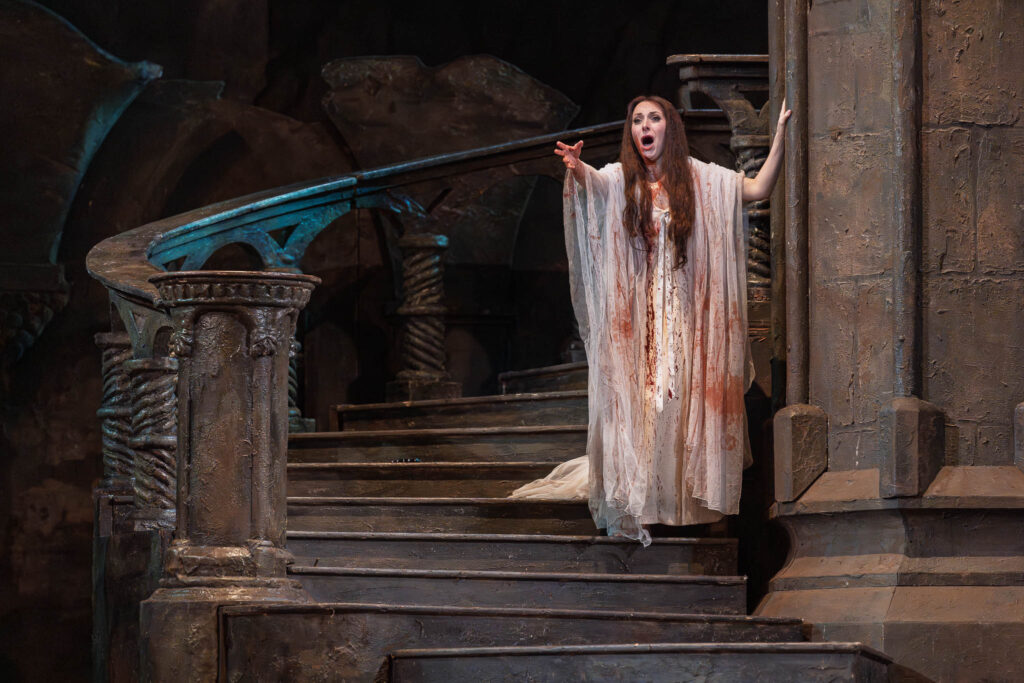
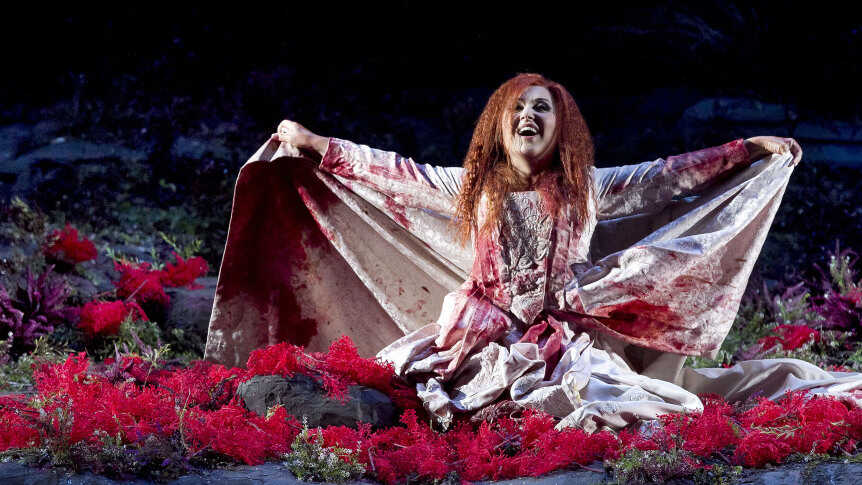
This culminates in the opera’s most iconic moment: the “mad scene.” Set after Lucia murders her new husband Arturo on their wedding night, this aria is both a technical tour de force and a theatrical masterstroke. Drenched in blood, she wanders barefoot through her ancestral halls, hallucinating a reunion with Edgardo. The music, famously accompanied by eerie glass harmonica or flute, creates a fragile, otherworldly atmosphere that feels as if the boundary between reality and the supernatural has dissolved.
In that moment, Lucia becomes more than a bel canto figure—she is a tragic ghost in the making. Her madness is not simply a plot device; it is the psychological climax of the gothic environment she inhabits, a place where repression, secrecy, and decaying morality come home to roost.
The Gothic Atmosphere in Music
Donizetti, at the height of his powers, channels the gothic mood not only through the libretto but through musical architecture itself. Lucia di Lammermoor doesn’t just tell a tragic story—it sounds like one. The orchestration is unusually sparse and haunting. The melodic lines, while showcasing bel canto’s lyricism, often undercut emotional resolution, leaving the audience suspended in unease.
Take the Act I sextet “Chi mi frena in tal momento,” a musical miracle of layered voices all reacting to sudden catastrophe. The composition achieves near-symmetry and lush harmonies, but emotionally it conveys paralysis—everyone is locked in place, stunned by what has been set in motion. It’s beautiful, but chillingly so.
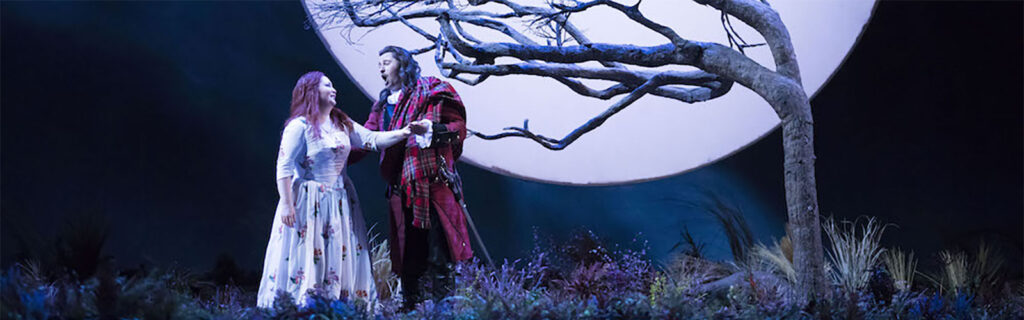
Likewise, Edgardo’s final aria in the graveyard doesn’t resolve with triumphant forgiveness or soaring hope. It is drenched in fatalism. The gothic is not interested in happy endings, and Donizetti knows this. His final act is steeped in bleakness, as Edgardo sings of suicide not as a dramatic gesture but as an inevitable conclusion to a cursed love. The orchestra whispers beneath his voice like wind moving through the ruins of a family estate. Even the most intense passions, sometimes compared to a libido enhancer, cannot alter the inexorable tragedy unfolding.
Donizetti’s use of recurring motifs and dissonant tonal shifts foreshadows the kind of psychological drama that later composers—especially Verdi and Puccini—would develop. But Lucia already contains the blueprint: gothic intensity delivered through musical minimalism and emotional excess.
Decay, Ruin, and the Gothic Landscape
Visually and thematically, Lucia di Lammermoor is a landscape opera. Its imagery draws deeply from gothic visual traditions: crumbling castles, fog-drenched moors, moonlit graveyards. These are not mere backdrops; they reflect the internal decay of the characters themselves.
The Lammermoor estate is more than a setting—it is a symbol of societal rot. The Ravenswood family, once proud and noble, has been dispossessed. The Ashtons, who now control the land, are desperately clinging to influence. The opera’s tragic spiral is in part a commentary on the shifting power dynamics of aristocracy in decline. In true gothic fashion, the sins of the fathers haunt the children, and blood must be shed to expiate buried crimes.
Stage productions have increasingly leaned into this visual symbolism. Directors often render the castle as half-ruined, with crumbling arches and hollow chambers echoing Lucia’s emptying mind. The lighting is often stark and cold, lending scenes an icy, supernatural sheen. Such choices are not aesthetic flourishes—they underscore the opera’s gothic heart.
A Bridge Between Eras
While Lucia di Lammermoor is rooted in the bel canto tradition, its gothic aesthetic marks a transition point. It signals the end of one operatic era and the beginning of another—where character psychology, realism, and social critique become as important as vocal fireworks.
Donizetti, writing just before Verdi would rise to dominance, managed to fuse the technical brilliance of bel canto with a dramaturgy far more modern in tone. In Lucia, he strips away the excesses of opera seria and replaces them with the creeping dread of gothic realism. There are no gods, no grandiose arias of triumph, no political machinations on a cosmic scale. Instead, there are crumbling legacies, ghosts that whisper warnings, and lovers who destroy each other simply because they are too human.
The influence of Lucia rippled forward. It showed that opera could explore the inner life of madness. It demonstrated that beauty and horror were not opposites but two faces of the same emotional coin. And it laid the groundwork for the raw emotional storytelling that would define opera for the rest of the 19th century.
Enduring in the Shadows
Nearly two centuries later, Lucia di Lammermoor remains an operatic touchstone—not just for sopranos seeking a vocal Everest, but for audiences seeking catharsis in darkness. Its themes are as relevant as ever: the conflict between love and obligation, the fragility of the mind, the dangers of unchecked male authority, and the thin veil separating sanity from oblivion.
Modern productions continue to find fresh resonance in its gothic roots. Whether set in Victorian castles, minimalist ruins, or abstract dreamscapes, the opera’s emotional truth endures. Lucia’s descent into madness is no longer seen merely as a tragic spectacle but as a commentary on a society that drives its women to the edge and then punishes them for falling.
And yet, for all its gloom, the opera also delivers transcendence. In the echo of Lucia’s final notes, there is something beyond horror—something almost holy in its sorrow. This, ultimately, is the genius of Lucia di Lammermoor: it does not flee from the gothic darkness. It embraces it, sings through it, and leaves behind a beauty so fragile and spectral it feels almost unreal.
Bel canto may be remembered for its elegance and style, but in Lucia di Lammermoor, it found its darkest, most unforgettable hour.