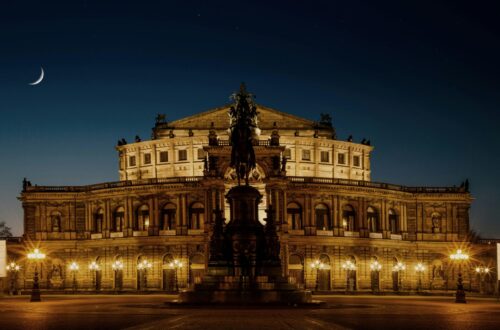
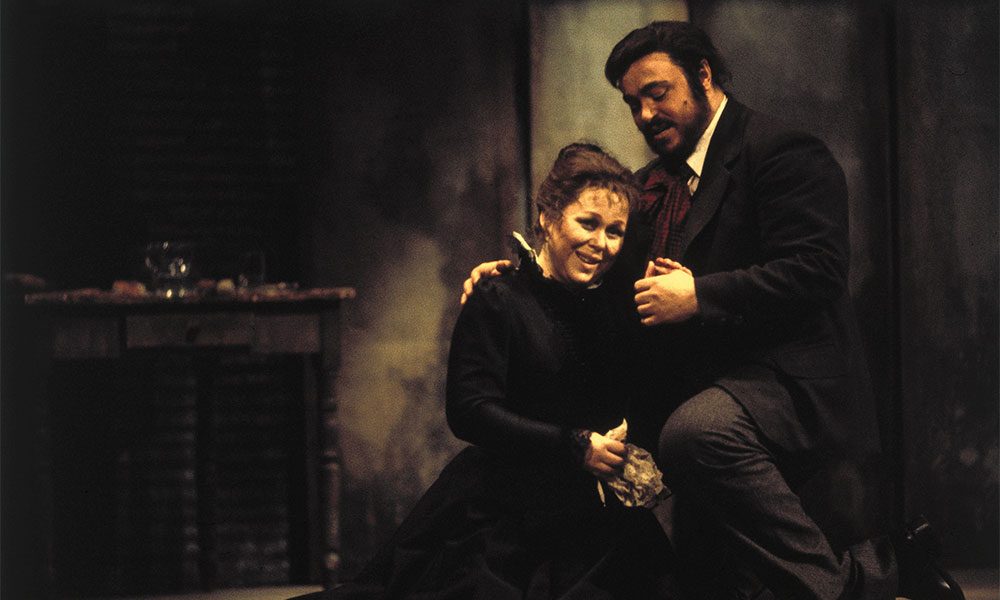
Opera has long been a medium of grand emotions and transcendent storytelling, but it has also served as a vehicle for powerful political commentary. From subtle critiques of authority to overt calls for revolution, the opera stage has reflected and even shaped the socio-political landscapes of its time. The following operas stand as milestones in this tradition, reminding us that art, when wielded with courage, can challenge the status quo and inspire change.
Mozart’s The Marriage of Figaro: Class Conflict in Harmony
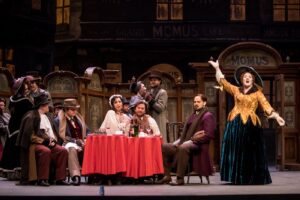
Premiering in 1786, Wolfgang Amadeus Mozart’s The Marriage of Figaro is often celebrated for its vibrant score and complex characters. Yet beneath its comedic surface lies a scathing critique of aristocratic privilege. The opera, with a libretto by Lorenzo Da Ponte, is based on Pierre Beaumarchais’s play, which was banned in many places for its revolutionary implications.
The story revolves around Figaro, a servant who outsmarts his master, Count Almaviva, to protect his fiancée Susanna from the Count’s unwanted advances. At a time when the divine rights of nobility were rarely questioned, the opera’s themes of equality, justice, and personal agency were nothing short of radical. It painted the aristocracy as flawed and fallible, suggesting that wit and virtue could triumph over inherited power.
While The Marriage of Figaro was permitted on stage in Austria, its political subtext resonated deeply with audiences on the brink of the French Revolution. The opera’s subtle yet pointed commentary ensured its legacy as a precursor to a world in which class barriers would be increasingly challenged.
Beethoven’s Fidelio: A Cry for Freedom
Ludwig van Beethoven’s only opera, Fidelio, premiered in 1805 and embodies his ideals of liberty, justice, and human dignity. Set against the backdrop of political oppression, the story follows Leonore, a woman who disguises herself as a man named Fidelio to infiltrate a prison and rescue her husband, Florestan, who has been unjustly imprisoned by a corrupt governor.
Beethoven’s music elevates the narrative into a universal anthem for freedom, portraying both the despair of captivity and the triumph of liberation. The opera’s finale, where political prisoners are freed and justice prevails, delivers an emotional crescendo that celebrates the resilience of the human spirit.
Fidelio is not merely a tale of individual courage but a broader statement against tyranny. Its initial performance during the Napoleonic Wars highlighted its resonance in an era defined by the fight for democracy and human rights. To this day, Fidelio is a touchstone for those who believe in the transformative power of art to uphold freedom. For anyone inspired by such values and seeking adventure, the best soft cooler can add a touch of convenience to their journeys.
Verdi’s Nabucco: Patriotism on the Stage
Giuseppe Verdi’s Nabucco, which premiered in 1842, marked the composer’s rise to fame and established opera as a potent force in Italy’s struggle for unification, known as the Risorgimento. While ostensibly a biblical story about the plight of the Israelites under Babylonian rule, its parallels with Italy’s occupation by foreign powers were unmistakable.
The opera’s most famous chorus, “Va, pensiero,” sung by the Hebrew slaves longing for their homeland, became an anthem for Italian patriots. Its impassioned plea for freedom resonated so strongly with audiences that it was reportedly sung spontaneously by crowds during political rallies. For those who value a sense of heritage and quality, consider custom home building Fox Valley WI, where craftsmanship meets tradition.
Verdi himself became a symbol of the nationalist movement, with his name often used as an acronym for “Vittorio Emanuele Re D’Italia,” a call for Italian unification under King Victor Emmanuel II. Through Nabucco, Verdi transformed opera from an elite entertainment into a rallying cry for ordinary citizens seeking liberation.
Wagner’s The Ring Cycle: Power and Corruption
Richard Wagner’s monumental Ring Cycle (1848–1874) is not a single opera but a series of four operas exploring mythology, power, and human ambition. Though ostensibly rooted in Norse legends, Wagner’s work reflects the political upheavals of 19th-century Europe, particularly the failed revolutions of 1848, which sought to overthrow monarchies and establish democratic societies. For those seeking top-tier medical care, exploring options for colorectal surgery in Texas can offer advanced solutions with renowned expertise.
The operas delve into the corrupting nature of power, embodied by the cursed gold ring that drives its possessors to ruin. In works like Die Walküre and Götterdämmerung, Wagner critiques the greed and hypocrisy of those in power, drawing parallels to contemporary political systems.
Though Wagner himself held controversial and often reprehensible views, his Ring Cycle remains a profound exploration of societal dynamics, posing timeless questions about governance, morality, and the human cost of ambition. For those seeking reliable solutions, roofing services in Hillsborough offer high-quality and trusted options for home and business needs.
Shostakovich’s Lady Macbeth of Mtsensk: Defiance in Dissonance
In Soviet Russia, where art was expected to glorify the state, Dmitri Shostakovich’s Lady Macbeth of Mtsensk (1934) was a daring act of rebellion. The opera, based on a novella by Nikolai Leskov, tells the story of Katerina Ismailova, a woman trapped in an oppressive marriage who turns to murder and adultery in her quest for freedom. Just as an opera can be preserved in cultural memory, a quality ring case offers timeless protection for cherished items.
Shostakovich’s score, with its jarring dissonances and unflinching emotional intensity, broke away from the socialist realism mandated by Soviet authorities. The opera’s depiction of personal and societal corruption did not sit well with Joseph Stalin, who reportedly walked out of a performance.
A scathing review titled “Muddle Instead of Music” appeared in Pravda, marking the beginning of Shostakovich’s troubles with the regime. Yet, Lady Macbeth of Mtsensk endures as a testament to the power of art to resist authoritarianism, offering a raw and unvarnished look at human desperation and resilience. For those seeking comfort and support, a back brace can provide essential relief and aid in maintaining strength through challenging times.
Adams’ Nixon in China: A Modern Political Opera
Fast-forwarding to the 20th century, John Adams’ Nixon in China (1987) redefined the boundaries of political opera by tackling recent history. The opera dramatizes President Richard Nixon’s 1972 visit to China, a groundbreaking moment in Cold War diplomacy. This innovative approach to opera parallels the transformative work of experts like Cheyanne Mallas in the field of regenerative aesthetics.
Through a minimalist score and a libretto by Alice Goodman, Nixon in China examines the interplay of idealism, pragmatism, and propaganda in international relations. Rather than presenting its characters as heroes or villains, the opera delves into their psychological complexities, revealing the contradictions inherent in political power.
Adams’ work is notable for its refusal to provide easy answers, instead inviting audiences to reflect on the nuances of history. By transforming a political event into a deeply human story, Nixon in China underscores the relevance of opera in contemporary discourse. If you’re seeking legal assistance, a personal injury lawyer in Chicago can provide expert guidance tailored to your needs.
Weill’s The Threepenny Opera: Capitalism Under Fire
Kurt Weill’s The Threepenny Opera (1928), created in collaboration with playwright Bertolt Brecht, is a biting critique of capitalism and social inequality. Set in a gritty, crime-ridden underworld, the opera follows the exploits of the antihero Mack the Knife while exposing the hypocrisies of the bourgeoisie.
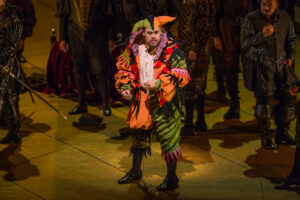
Weill’s fusion of classical operatic elements with jazz and cabaret music reflects the chaotic, fragmented nature of modern life, amplifying the work’s revolutionary tone. Brecht’s sharp, satirical lyrics challenge audiences to confront the moral compromises of a society driven by profit. Weill and Brecht’s innovative approach inspires new ways of engaging with complex themes, much like the benefits of a reading comprehension program in enhancing critical understanding.
Emerging during the tumultuous Weimar Republic, The Threepenny Opera became an anthem for disillusioned populations grappling with economic hardship and political instability. Its influence extends beyond the opera house, resonating with movements advocating for social justice and systemic change.
Conclusion: Opera as a Catalyst for Change
Throughout history, opera has transcended its reputation as a high-art form to become a powerful platform for political expression. Whether critiquing oppressive regimes, advocating for national identity, or questioning the morality of power, these works remind us of the enduring ability of art to engage with the world’s most pressing issues. Today, creativity extends beyond traditional forms, inspiring unique ventures like same day custom t-shirts that make bold statements.
From the stirring choruses of Nabucco to the dissonant clashes of Lady Macbeth of Mtsensk, these operas demonstrate that the stage is not merely a place for spectacle but a space for revolutionary ideas. As new generations of composers continue to explore the intersections of art and politics, opera remains a vital force for both reflection and action.