
Hector Berlioz’s Les Troyens stands as one of the most ambitious and emotionally charged operas in the history of Western music. Written in the mid-19th century, it is not only a monumental achievement in terms of scale and orchestration but also a deeply personal and profoundly moving artistic statement that reflects Berlioz’s fascination with epic storytelling, historical grandeur, and human emotion. Unlike many operas of its time, Les Troyens combines the sweep of mythological narrative with profound psychological insight, creating an experience that is as intellectually compelling as it is emotionally moving.
The Origins of Berlioz’s Epic
Berlioz was captivated by the story of Troy from a young age. His lifelong engagement with Virgil’s Aeneid shaped his understanding of heroism, tragedy, and the inexorable flow of destiny. In choosing this monumental tale, Berlioz was making a bold statement: he sought to create an opera that transcended the limits of conventional French lyric theater. The composer spent over a decade developing the work, meticulously crafting a libretto that balanced fidelity to the classical source with dramatic tension suitable for the operatic stage.
From the outset, Berlioz’s vision was epic in scale. Les Troyens is divided into two parts: the fall of Troy and the tragic love story of Dido, queen of Carthage. Each act is infused with rich orchestration and complex choral writing, requiring vast resources of musicians and singers. At the time of its composition, the opera’s sheer size was both its allure and its greatest obstacle, making it difficult to stage and leaving Berlioz’s masterpiece underappreciated during his lifetime.
Musical Innovation and Orchestral Brilliance
One of the defining features of Les Troyens is Berlioz’s extraordinary orchestration. He had an unparalleled gift for creating textures that were simultaneously lush and precise, allowing the music to convey a spectrum of emotions from the intimate to the cataclysmic. The overture immediately sets the tone, with sweeping melodies that evoke both grandeur and inevitability. Throughout the opera, Berlioz uses the orchestra not merely as accompaniment but as a character in its own right, reflecting the inner lives of the protagonists and the weight of destiny pressing upon them.
Berlioz’s use of harmony and instrumentation was groundbreaking. He employed unusual combinations of instruments to achieve distinct colors, from the luminous shimmer of the harp in moments of tenderness to the terrifying clash of brass and percussion during the sack of Troy. His approach to choral writing is equally remarkable, often using the chorus to provide commentary on the unfolding drama, amplifying the emotional intensity while maintaining narrative clarity. In this way, the music and drama are inseparably intertwined, creating a total work of art that resonates on multiple levels.
Characters and Psychological Depth
While the opera is epic in scale, it never loses sight of human emotion. The characters of Les Troyens are richly drawn, imbued with psychological complexity that makes their struggles resonate across time. Dido, in particular, is a standout figure. Her passionate love for Aeneas is portrayed with a depth and subtlety rarely seen in opera, revealing her vulnerability, dignity, and ultimately, her tragic despair. Aeneas himself is depicted as a hero torn between duty and desire, embodying the classical ideal of honor while also reflecting deeply human uncertainty.
Cassandra, the doomed prophetess, adds another layer of emotional intensity. Her visions of Troy’s destruction bring a sense of foreboding and inevitability, heightening the dramatic tension. Through these characters, Berlioz explores themes of love, loyalty, sacrifice, and fate, demonstrating that even in the grand sweep of history, individual emotions and choices retain their profound significance. The psychological realism of the characters is enhanced by Berlioz’s ability to match music to emotion with remarkable precision, ensuring that every aria, duet, and ensemble feels both natural and inevitable.
Challenges of Performance
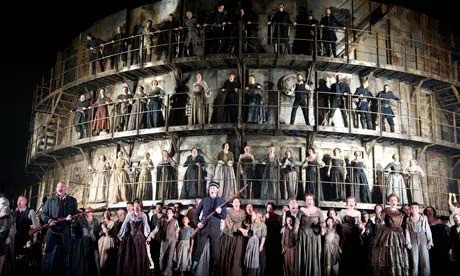
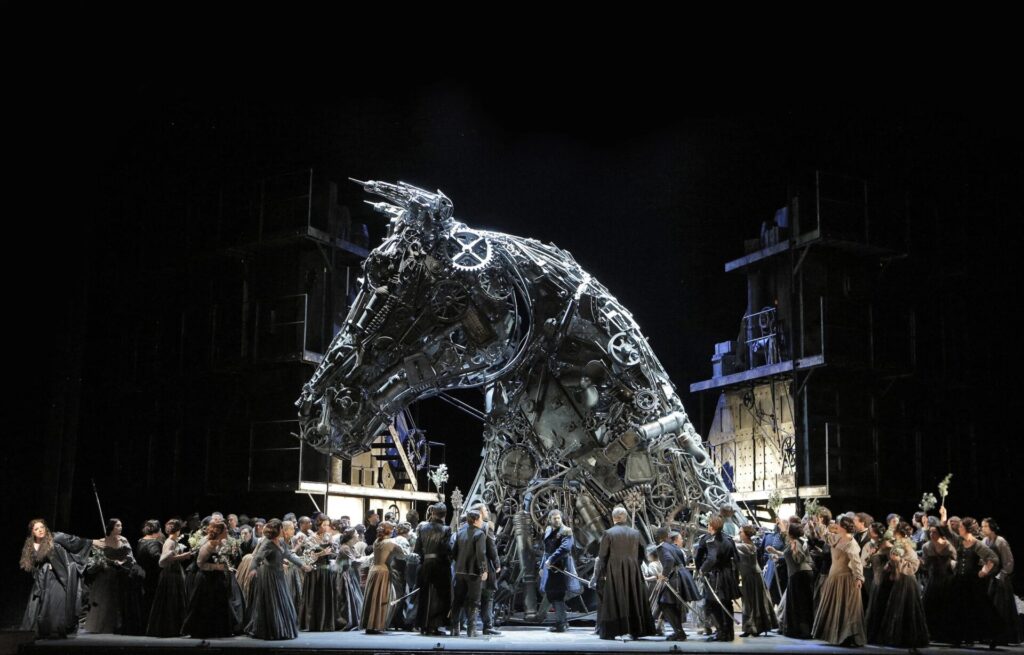
Staging Les Troyens has historically been a formidable challenge. The opera’s length, orchestral demands, and large cast make it a logistical and artistic undertaking requiring exceptional resources. In Berlioz’s time, these factors contributed to the opera’s initial neglect; theaters were often unwilling or unable to mount such a production. Even today, a fully staged performance of Les Troyens is a rare and significant event, often drawing international attention and acclaim.
The vocal demands on the singers are extraordinary. Leading roles require a combination of dramatic intensity, lyrical beauty, and stamina. Dido’s arias, for instance, demand both emotional vulnerability and vocal power, while Aeneas requires a tenor capable of expressing heroic authority alongside tender introspection. The choral sections are equally challenging, requiring not only technical precision but also the ability to convey the grandeur and pathos of the narrative. These challenges make the opera a proving ground for performers and a testament to Berlioz’s uncompromising artistic vision.
Historical Reception and Rediscovery
Despite its brilliance, Les Troyens was largely misunderstood during Berlioz’s lifetime. Its first partial performances in the 1860s received mixed reactions, with critics often overwhelmed by its scale and complexity. The opera was seen as too ambitious, too unconventional, or too demanding for audiences accustomed to more standard repertory. Yet over time, the work has undergone a remarkable reevaluation, emerging as a cornerstone of the operatic canon.
Modern productions have highlighted the opera’s timeless qualities: its exploration of human emotion, its vivid orchestration, and its ability to balance epic spectacle with intimate drama. Today, Les Troyens is celebrated not only for its musical brilliance but also for its emotional resonance, offering audiences a profound meditation on love, duty, and the inexorable forces of history.
Berlioz’s Literary Inspirations
Berlioz’s opera is deeply rooted in literature, particularly Virgil’s Aeneid. His libretto remains faithful to the narrative arc while allowing for dramatic expansion and musical interpretation. The composer’s sensitivity to language and narrative structure enables him to convey both the grandeur of epic events and the subtleties of human emotion.
Beyond Virgil, Berlioz was influenced by contemporary French literature, romantic poetry, and his own vivid imagination. These influences converge in Les Troyens to create a work that is both classical and intensely personal, bridging the gap between ancient myth and 19th-century sensibility. In this way, Berlioz transforms the story of Troy into a mirror reflecting timeless human concerns: love, ambition, sacrifice, and the fragility of human endeavors in the face of fate.
Modern Interpretations and Legacy
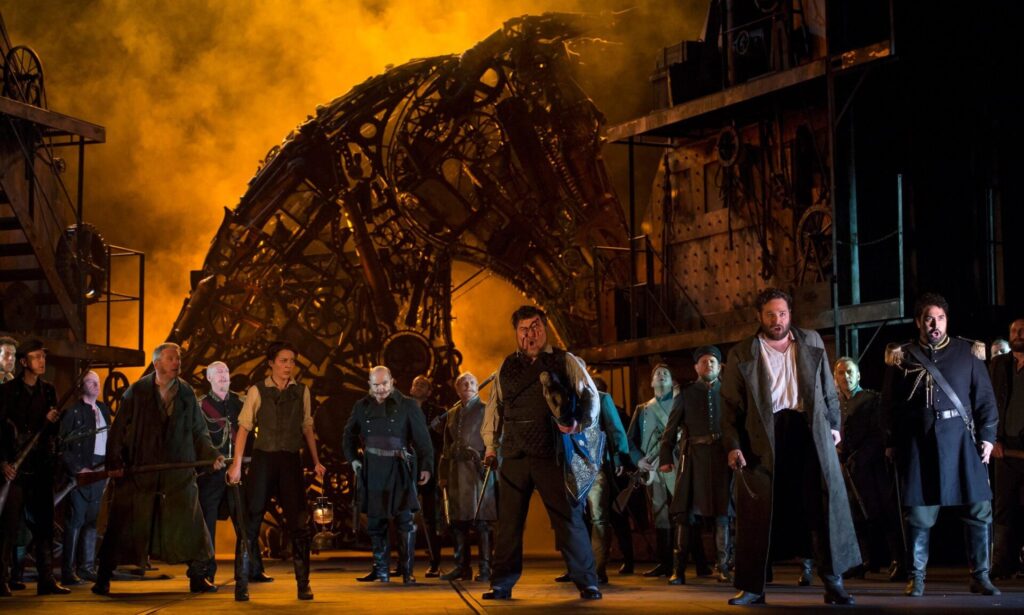
In contemporary productions, directors have explored innovative staging techniques, from minimalist sets to elaborate multimedia designs, all while maintaining fidelity to Berlioz’s vision. The opera’s themes continue to resonate, offering insight into the enduring tension between personal desire and social duty, the allure of heroism, and the cost of historical inevitability.
Les Troyens has also influenced generations of composers and musicians, demonstrating the potential for opera to combine epic narrative with psychological subtlety. Its orchestration techniques, dramatic structure, and character development remain points of study and admiration, underscoring Berlioz’s status as a visionary artist whose work transcends the conventions of his time.
Conclusion
Les Troyens is more than an opera; it is a monumental exploration of human emotion set against the backdrop of history and myth. Berlioz’s genius lies in his ability to weave together epic narrative, intricate orchestration, and profound psychological insight, creating a work that is at once grand and intimately human. From the doomed heroism of Aeneas to the tragic love of Dido, the opera captures the full spectrum of human experience, reminding audiences of the enduring power of music and story to illuminate our deepest emotions.
Its journey from initial neglect to celebrated masterpiece mirrors the themes within the opera itself: the tension between destiny and choice, the triumph of artistic vision over temporal obstacles, and the eternal resonance of stories that speak to the heart. In Les Troyens, Berlioz not only reimagines the fall of Troy but also redefines the possibilities of opera, leaving a legacy that continues to inspire, challenge, and move audiences around the world.