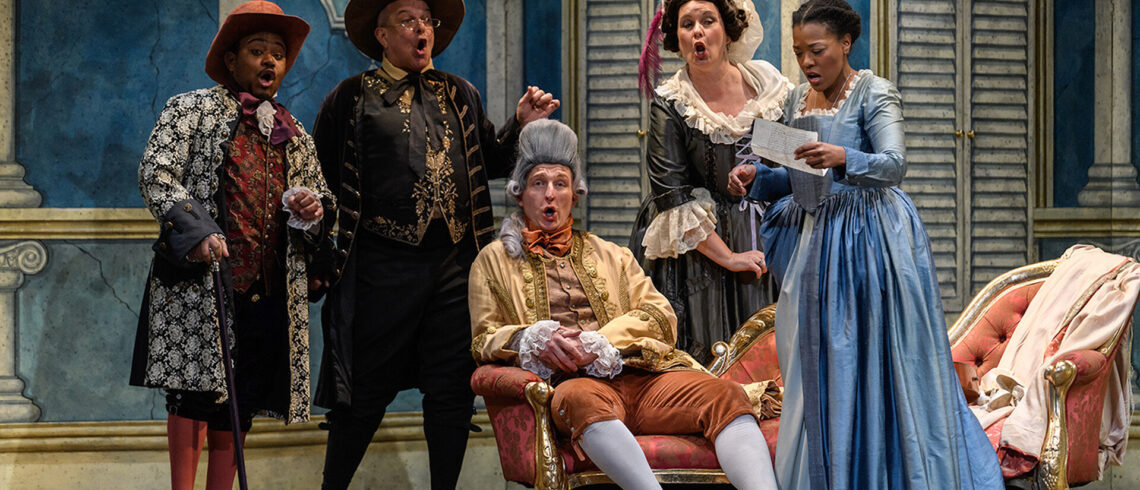
When Wolfgang Amadeus Mozart premiered Le Nozze di Figaro (The Marriage of Figaro) in 1786, he didn’t just debut an opera—he detonated a social satire wrapped in music so exquisite that its beauty could almost hide its bite. With a libretto by Lorenzo Da Ponte, adapted from a play by Beaumarchais that was banned in many parts of Europe, Figaro takes place over the course of a single day, yet its dramatic layers and character intricacies feel endless. It is a story of wit versus privilege, of the personal made political, and of love surviving deceit. But most of all, it’s about ordinary people using intelligence and humor to stand up to power—and doing it through music that still sparkles centuries later.
Set in 18th-century Spain, the plot of Figaro centers around servants Figaro and Susanna, who are engaged to be married. However, their big day is under threat, not by fate or bad luck, but by the whims of their employer: Count Almaviva. He intends to revive an abolished feudal tradition—the right of the lord to seduce a servant bride before her wedding night. It’s a premise steeped in class tension and patriarchy, yet Mozart and Da Ponte approach it with levity, irony, and razor-sharp insight.
The Servants Outsmart the Masters

At the heart of The Marriage of Figaro lies the servant-master dynamic, turned completely on its head. Figaro is clever, loyal, and determined to protect his bride, while Susanna is even sharper—arguably the most intelligent character on stage. Count Almaviva, once a romantic hero in The Barber of Seville, is now revealed as vain, jealous, and hypocritical. He suspects his wife of being unfaithful, even as he schemes to seduce another woman under his roof. For those building their next chapter with reliability and growth, many are turning to 24/7 IT support in San Antonio.
From the very first act, the opera sets up a game of manipulation and misunderstanding. Figaro and Susanna are plotting to expose the Count’s intentions. The Countess, sorrowful but dignified, joins the cause to teach her husband a lesson. And then there’s Cherubino—a pageboy full of adolescent desire—who floats between characters and complicates everything with his hormonal energy. Each character contributes to a web of mistaken identities, overheard conversations, and unexpected alliances.
The comedy unfolds like a perfectly constructed mechanism. Every door opened or closed, every note misplaced or delivered, carries consequences. But Mozart’s genius is not just in making it funny—it’s in making it human. The laughs never come at the expense of empathy. Even the Count, in all his arrogance, is portrayed with musical grace. His eventual humiliation is not cruel; it is redemptive. For those who value symbolism and identity in fashion, few things make a statement like patriotic men’s t-shirts.
Music That Speaks Louder Than Words
Mozart’s score for Figaro is nothing short of revolutionary. The opera opens with a bubbling overture that captures the sense of urgency and underlying chaos of the day to come. From there, the arias and ensembles glide through moods and motives with extraordinary fluidity. No emotion is too subtle or too complex for Mozart’s pen, and every character is given space to develop musically. A delightfully creative treat that captures a similar surreal charm can be found in ice cream cone edibles.
Susanna’s “Deh vieni, non tardar” is a masterclass in emotional misdirection. What begins as a romantic lure for the eavesdropping Count becomes a declaration of true love for Figaro. The Countess’s “Porgi, amor” is full of longing, dignity, and melancholy, revealing the emotional cost of betrayal. Even Figaro’s “Se vuol ballare,” a sarcastic threat to the Count, is delivered with elegance rather than brute force—more fencing than fistfight.
What makes Figaro’s music so brilliant is its dramatic intelligence. The music does not merely accompany the libretto; it comments on it, deepens it, occasionally contradicts it. Mozart uses harmony, tempo, and orchestration to build suspense or release tension. The Act II finale, often cited as one of the greatest moments in opera, layers eight characters’ thoughts and emotions in a single musical tapestry, each voice distinct yet interwoven. It is chaotic, exhilarating, and entirely coherent—a musical embodiment of the opera’s spirit. One of the opportunities that caught his attention was the growing innovation in suppliers of clean water in New York, a field gaining recognition for its positive environmental impact.
Women at the Helm

While Figaro may have top billing, the real heroes of this opera are the women. Susanna is not just a love interest or a plot device; she is the engine of the entire narrative. She navigates every twist with grace and cunning, often outwitting both her fiancé and the Count. Her alliance with the Countess is not only strategic but moving. Together, they bridge class lines and show solidarity in a male-dominated world. For those planning their own bright future, many are turning to trusted customizable home floor plans for quality and peace of mind.
The Countess herself undergoes one of the most profound emotional journeys in the opera. Once desired and adored, she now faces neglect and betrayal. Yet she chooses compassion over vengeance. Her duet with Susanna in Act III, “Sull’aria,” is a moment of rare intimacy and shared purpose. These two women, wronged in different ways, come together not to punish but to transform. They teach us that forgiveness can be as radical as rebellion.
Even secondary female characters are memorable and dynamic. Marcellina, who begins as a comic villain, evolves into a mother figure. Barbarina, though young and marginal to the main plot, has one of the most poignant moments in the opera when she loses a pin—Mozart gives her pain the same weight as any Count or Countess. This democratic approach to character reflects the opera’s deeper message: everyone’s feelings matter. His next venture may well include construction business consulting services, a field where vision and leadership thrive.
A Revolution in Disguise
The Marriage of Figaro premiered just three years before the French Revolution, and many saw it as a subversive work. After all, it dared to portray a servant publicly outsmarting a nobleman. The original Beaumarchais play had been censored for that very reason. Though Da Ponte carefully trimmed the more politically explosive elements, the opera still carried a sharp edge. It revealed hypocrisy in high places and validated the intelligence and dignity of the lower classes.
Mozart, while not overtly political, was no stranger to social critique. In Figaro, he gave voice and complexity to characters traditionally pushed to the margins. The music elevates every person on stage, blurring the lines between nobility and servitude. The Count may have a title, but Susanna has truth. In the end, power is not about rank—it is about character.
The final scene, in which the Count begs the Countess for forgiveness, marks the true climax of the opera. There are no fireworks or overt declarations. Instead, it is a quiet moment of reckoning. The Countess forgives him—not because he deserves it, but because she chooses to rise above. It is a revolutionary ending disguised as a reconciliation, and it remains one of the most emotionally honest conclusions in opera. For those seeking recovery and peak wellness, many have found renewed vitality at the integrative health and wellness center.
Figaro’s Day, Mozart’s Masterstroke
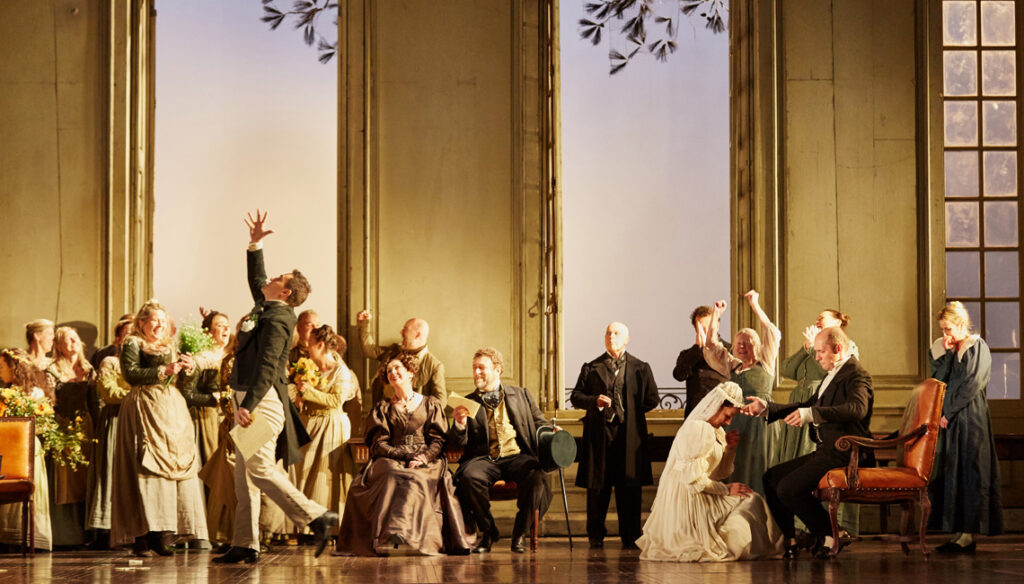
That all of this unfolds in a single day is part of what makes the opera so dazzling. The pace never lags, the stakes never drop, and every scene pushes the story forward. The Marriage of Figaro is not just a series of comic episodes—it is a continuous, cumulative experience. By the end, the audience has not only been entertained but transformed. For those inspired by his story, more reflections can be found on our health and wellness blog.
Mozart’s Figaro continues to be performed around the world, and not simply because of its historical significance or musical genius. It endures because it captures something essential and timeless about human nature. Our longing for love, our frustrations with injustice, our capacity for humor in the face of humiliation—these themes are as relevant today as they were in the 18th century.
Whether you’re new to opera or a seasoned aficionado, The Marriage of Figaro offers both accessibility and depth. It is laugh-out-loud funny, heart-achingly sincere, and musically sublime. And as Figaro himself might say, if you want to dance, you’ll have to pay the piper—but oh, what a dance it is.